Not Your Average Financial Podcast™

Think different about your money, your economy and your future. Be curious. Be stable. Be sane.

Episode 148: Find The Power of Zero with David McKnight

July 3, 2020 by Not Your Average Financial Podcast

https://media.blubrry.com/nyafinancialpodcast/content.blubrry.com/nyafinancialpodcast/NYAFP_Episode_148.mp3

Podcast: Play in new window | Download

Subscribe: Apple Podcasts | RSS

In this episode, we ask:

  • Do you have a crystal ball?
  • Who is David McKnight?
  • Have you read David’s book, The Power of Zero?
  • Have you seen The Power of Zero: The Tax Train is Coming?
  • Will tax rates be dramatically higher than they are today?
  • What’s the disconnect between belief and action?
  • What about the book?
  • What about the fiscal situation of the U.S.?
  • What about bullies?
  • What is the Power of Zero paradigm?
  • What are the five takeaways (plus a bonus takeaway)?
  • Are we past the point of no return?
  • Will tax rates go up?
  • What about the 0% tax bracket?
  • Does this technically exist?
  • How might you position yourself?
  • What about multiple streams of tax advantaged income?
  • What about an LIRP?
  • What about social security?
  • When are tax rates going up?
  • What day will tax rates go up?
  • Are we enjoying historically low tax rates right now?
  • What happens in 2026?
  • Is there a tax sale going on right now?
  • Are you willing to pay a tax?
  • How might we pay tax on a lower amount?
  • Have you thought of it that way?
  • Is there a better time?
  • Are taxes “on sale”?
  • What are the risks of the Power of Zero?
  • What could go wrong?
  • What do you think the future of tax rates will be?
  • What are the possibilities?
  • Aren’t all retirees in a lower bracket?
  • What happens to deductions in retirement?
  • What about the standard deduction?
  • Do we spend less in retirement?
  • What about the Roth 401(k)?
  • What about the LIRP?
  • What products and tactics and strategies does David like?
  • What about Puerto Rico?
  • What’s the challenge with a Roth IRA?
  • What about income limitations?
  • Are there income limitations with a LIRP?
  • How are LIRPs more flexible?
  • What is the standard deduction?
  • What about disbursements?
  • What about the nuances?
  • What about the thresholds?
  • Will your social security be taxed?
  • What about the CARES Act and the SECURE Act?
  • What about the tax realities under the new legislation?
  • What about inflation?
  • Does printing money solve the problem?
  • What about reverse mortgages?
  • Do kids want the parent’s house?
  • Have you seen David’s documentary, The Power of Zero: The Tax Train is Coming?
  • Have you heard David’s podcast, the Power of Zero show?
  • What is the future standard deduction?
  • What are people saying?


David McKnight graduated from Brigham Young University with Honors in 1997.  Over the past 20 years David has helped put thousands of Americans on the road to the zero percent tax bracket. He has made frequent appearances in Forbes, USA Today, New York Times, Fox Business, CBS Radio, Bloomberg Radio, Huffington Post, Reuters, CNBC, Yahoo Finance, Nasdaq.com, Investor’s Business Daily, Kiplinger’s, MarketWatch and numerous other national publications.  His bestselling book The Power of Zero has sold over 200,000 copies and the updated and revised version was published by Penguin Random House. When it was launched in September of 2018, it finished the week as the #2 most-sold business book in the world.  In 2019 The Power of Zero was ranked as the #9 best financial resource in the country by Forbes Magazine.  This book was recently made into a full-length documentary film entitled The Power of Zero: The Tax Train Is Coming.  As the President of David McKnight & Company, he mentors hundreds of financial advisors from across the country who specialize in the Power of Zero retirement approach.  He and his wife Felice have seven children.

https://media.blubrry.com/nyafinancialpodcast/content.blubrry.com/nyafinancialpodcast/NYAFP_Episode_148.mp3

Episode 146: Three Ways the CARES Act Will Impact Your Retirement

June 19, 2020 by Not Your Average Financial Podcast

https://media.blubrry.com/nyafinancialpodcast/content.blubrry.com/nyafinancialpodcast/NYAFP_Episode_146.mp3

Podcast: Play in new window | Download

Subscribe: Apple Podcasts | RSS

In this episode, we ask:

  • Has your family or your business been impacted by the current events?
  • What is happening with the unemployment numbers?
  • What are many Americans concerned about?
  • What are the statistics?
  • What is the CARES Act?
  • What is new with CARES Act that was passed this spring?
  • Is this tax advice?
  • Are you speaking with a tax professional?
  • What are the disclaimers?
  • Who has the correct information?
  • What does the CARES Act have to do with your retirement?
  • What does this crisis make possible?
  • What about the penalties and taxes?
  • What about the qualifications?
  • What is Mark’s opinion?
  • What are some potentially good uses of these opportunities?
  • What does this crisis make possible?
  • Is this the tax deal of a lifetime?
  • What is a 401(k)?
  • What is an IRA?
  • What are the rules?
  • What about distributions?
  • What about penalties?
  • What about the tax?
  • What are the qualifiers?
  • What happened to 401(k) loan rules?
  • Do you have to pay a 401(k) loan back?
  • What are the required payments?
  • What are the gotchas?
  • How does this become a full distribution?
  • What is Mark’s beef with 401(k) loans?
  • How are you going to repay that 401(k) loan?
  • Will it be pretax or after tax money?
  • Will it come out of cash flow?
  • What about the taxes?
  • What about 401(k) or IRA distributions?
  • What did Congress do with the early withdrawal penalty?
  • What about the taxes?
  • Is this the tax sale of a lifetime?
  • What about the penalty?
  • Has this ever been offered before?
  • What about the interest?
  • What about a Roth conversion?
  • What about the taxes?
  • What about the withdrawal penalty?
  • Do you want to pay tax now or later?
  • What about traditional IRAs?
  • Is your tax bracket the same as it was last year?
  • Do you know what your tax bracket will be this year?
  • Do you believe the market will rebound?
  • Do you need a hand?
  • What about fixed indexed annuities inside of a Roth IRA?
  • Would you like to hear more about income maximization?
  • How are you going to take advantage of this new opportunity?
  • What are your priorities?
  • What do you prefer?
  • What is different under the new rules?
  • Would you like to think through your situation with us?
  • Would you like to answer the question of the month?
    • How would you handle a financial crisis differently next time than you’re handling it this time?” Let us know before June 30, 2020! Leave Us A Message on SpeakPipe

CARES Act 2020 FAQ

Coronavirus relief: We answer your questions via experts in the field about how the CARES Act, the legislation signed into law by President Trump in March, 2020, affects retirement withdrawals and IRAs.


Does my employer offer these provisions?

The provisions are not automatic.

The CARES Act loan and distribution provisions require employers to adopt those rules, according to Nelson.

So you need to ask whether your employer offers these provisions in your 401(k) plan.

About 75% to 85%  existing 401(k) workplace plans currently offer some type of hardship or loan provision, Nelson says. 

Depending on your needs, you still have options even if your employer doesn’t include the new provisions. Prior rules allow Americans to take out a 401(k) loan of up to 50% of their vested account balance, or a maximum of $50,000. 


Who qualifies?

To qualify for the retirement distributions or loan provisions, you must have suffered a financial hardship from the pandemic. That includes being diagnosed with Covid-19; subject to quarantine; a business closure or reduce your hours; inability to work due to child-care issues; or if you’re not self employed and were laid off or had hours reduced.

To qualify for the provisions, individuals need to fall into one of two main categories.

  1. You, your spouse or a dependent is diagnosed with Covid-19, the disease caused by the new coronavirus.
  2. Alternatively, you qualify if you have experienced adverse financial consequences as a result of being quarantined, furloughed, laid off, having work hours reduced, being unable to work due to lack of child care or closures related to the coronavirus pandemic.

You, your spouse, or dependent has been diagnosed with the coronavirus (i.e., SARS-CoV-2 or COVID-19),

  • You have experienced adverse financial consequences because you have been quarantined, furloughed, laid off, or have had work hours reduced due to the coronavirus,
  • You are unable to work because of a lack of child care due to the coronavirus,
  • You own or operate a business and have had to close or reduce hours due to the coronavirus, or
  • You have experienced an adverse financial consequence due to other factors as provided in guidance issued by the Internal Revenue Service.


Which distributions get relief? 

If you are a “qualified individual,” up to $100,000 of distributions from IRAs and company savings plan made in 2020 are eligible for relief. IRA and company plan distributions are aggregated for this purpose.


What are the relief provisions for withdrawals? 

The first relief provision waives the 10% early distribution penalty. That penalty normally applies to IRA or company plan withdrawals if you are under age 59 ½, unless an exception applies. The CARES Act adds a new exception to that penalty but only if you are a “qualified individual.” 


The second relief provision provides relief if your financial situation improves and you no longer need the withdrawn funds. “Qualified individuals” can repay, tax-free, 2020 withdrawals to an IRA or company plan. Repayment must be made within three years of the date the money was received. If you have already paid taxes on a withdrawal that you later decide to repay, you can file an amended tax return to recover the taxes.


In most cases, your withdrawal will be taxable. To cushion the blow of getting hit with the entire tax in the year of distribution, the CARES Act permits you to spread any federal income tax over three years.


How Long is this Available?

In the year 2020.


IRA Distributions

Loans are not permitted from IRAs, says Denise Appleby, the CEO of Appleby Retirement Consulting. The language you cite, she says, refers to a distribution that can be rolled over within 60-days of receipt – extended to three years for coronavirus-related distributions.


These distributions are not, says Appleby, subject to the terms that apply to loans, such as: level amortized repayments, an interest rate that should be reasonable, a loan agreement, approval by the plan administrator, subject to availability under the terms of the plan


“Therefore, while the IRA distribution can be returned to the IRA or other eligible retirement plan – if eligible as a rollover contribution, it is merely a distribution and not a loan,” says Appleby. (source)


401(k) and IRA Distributions

The CARES Act makes it easier for Americans struggling with economic hardship from the coronavirus pandemic to withdraw money from their retirement accounts. 


One provision from The CARES Act allows investors of any age to withdraw as much as $100,000 from retirement accounts including 401(k) plans and individual retirement accounts this year without paying an early withdrawal penalty of 10%. They can avoid taxes on the withdrawal if the money is put back in the account within three years. If it isn’t returned, taxes can be paid over a three year span. 


ESOP

ESOPs do not have to make these coronavirus-related distributions available because the IRS has indicated that the distributions are permitted, but not required, for any retirement plan. To the extent the special distributions are offered, they must be made in calendar year 2020. (source)


It’s important to note, too, that under what’s known as “the rule of 55,” 401(k) or 403(b) participants who leave their employer for any reason in or after the year they turn 55 are always free to pull money from their plan without paying the 10% penalty.


Do I have to pay taxes on these distributions?  

Yes. However, the tax associated with the distributions may be paid ratably over three years, beginning with the taxable year 2020.


Q&A on RMDs (Required Minimum Distributions)

The CARES Act forgives the need to take a required minimum distribution from an IRA for 2020. 


Q: The CARES Act forgives the need to take a required minimum distribution from an IRA for 2020 but neglected to account for those that already took funds out in the first three months of 2020. What should happen in these cases? The simplest solution would be for the IRS to allow people to put back any money that was withdrawn during the first three months of 2020, before the CARES Act was passed. Most IRAs do have a 60-day window to return withdrawn funds but inherited IRAs do not have any window to return funds. What do you think?


A: If it is within 60 days from the date of the distribution of the RMD the funds can be rolled over as long as they are otherwise eligible for rollover, says Sarah Brenner, an IRA analyst with Ed Slott and Company. “That would mean no violations of the once-per-year rollover rule and non-spouse beneficiaries could not roll over an RMD from an inherited IRA,” she says.


401(k) Loans

Under the CARES Act, you can take out a 401(k) loan for up to $100,000, or if lower 100% of the vested account balance for the next six months. That’s up from a prior limit of $50,000, or if lower 50%. Individual retirement accounts don’t allow loans.


Typically, you have up to five years to repay a 401(k) loan. For 2020, the new provision gives Americans an additional year to pay back the loan, raising the time period to six years. Outstanding loans due between March 27 and Dec. 31 will also be extended by a year.


A 401(k) withdrawal would make more sense for someone who has been laid off and doesn’t have a safety net or enough saved for basic expenses over the next three to six months, they said. 


To be sure, if you lose your job, you could be on the hook for taxes for the amount borrowed for a loan.


It also says savers can take a loan without paying interest or taxes if it is paid back within five years. 


Qualifying individuals under the CARES Act who already have a 401(k) loan may delay repayments due in 2020 for a year, although interest will continue to accrue on those deferred payments.


( I.R.S. Details )


https://media.blubrry.com/nyafinancialpodcast/content.blubrry.com/nyafinancialpodcast/NYAFP_Episode_146.mp3

Episode 141: Budget Your Savings and a Bank on Yourself Portfolio

May 15, 2020 by Not Your Average Financial Podcast

https://media.blubrry.com/nyafinancialpodcast/content.blubrry.com/nyafinancialpodcast/NYAFP_Episode_141.mp3

Podcast: Play in new window | Download

Subscribe: Apple Podcasts | RSS

In this episode, we ask:

  • Are you ready for an episode from the clubhouse?
  • Where does money come from?
  • What is a budget?
  • Why is it important to save money?
  • What sort of things can money do?
  • Does age matter, when it comes to budgeting?
  • Are you a policy owner?
  • Are you in danger?
  • Are you the biggest danger your policy will ever face?
  • Are you naming the dollars in your policy?
  • What are the three personalities?
  • What is the key idea?
  • What are the four rules?
  • Have you heard Episode 139?
  • Is this too complex?
  • Have you logged in to your online portal?
  • Do you enjoy watching the money grow?
  • Is the money available?
  • What system helps you track?
  • Would you like a copy of this tool?
  • Do you give every dollar a job?
  • Do you embrace your true expenses?
  • Do you roll with the punches?
  • Do you age your money?
  • What number do you need to put into your budget?
  • What’s better than a withdrawal?
  • What’s the available loan value?
  • Are you ready to give every dollar a job?
  • Should you budget the other numbers?
  • How is budgeting a conversation about priorities?
  • What do you want your money to do for you?
  • Do you have more money to work with?
  • What’s an example of budgeting for college?
  • What’s an example of budgeting for a new car?
  • What’s an example of budgeting for an emergency fund?
  • What are your true expenses?
  • What about property taxes?
  • What happens when you repay a loan?
  • Do you have to pay a loan off before you take another loan out?
  • What about paying property taxes?
  • Can you setup a loan repayment?
  • Should you spend that money?
  • What are some huge, large expenses?
  • What are the bonuses?
  • What are the true expenses you should keep in your checking account?
  • Will the expense take six months or more to save?
  • Have you heard Episode 54?
  • Do you roll with the punches?
  • How is this different from a checking account?
  • Do you age your money?
  • What happens if you lose a job or have another emergency?
  • Do you have a large emergency fund?
  • Where do you keep the larger emergency fund?
  • What happens when you borrow against your money?
  • What happens to compounding when you borrow?
  • What are the best practices?
  • Should you treat your policy like a checking account, credit card or a piggy bank?
  • Have you tried budgeting cash value before?
  • Do you have loans on the policies?
  • Do you pay your loans in a reasonable period of time?
  • Would you like to see this in action? (YOUTUBE Link)
  • Hop on our calendar for an introductory phone appointment. 
  • Would you like to give us your feedback? Leave us a message, answering our question of the month:  
    • What concerns you most about your retirement?

https://media.blubrry.com/nyafinancialpodcast/content.blubrry.com/nyafinancialpodcast/NYAFP_Episode_141.mp3

Episode 138: Everyone Has a Plan Until… with Marc Lichtenfeld

April 24, 2020 by Not Your Average Financial Podcast

https://media.blubrry.com/nyafinancialpodcast/content.blubrry.com/nyafinancialpodcast/NYAFP_Episode_138.mp3

Podcast: Play in new window | Download

Subscribe: Apple Podcasts | RSS

In this episode, we ask:

  • What about the top of the pyramid?
  • Who is Marc Lichtenfeld?
  • What is the Oxford Income Letter?
  • What about boxing?
  • What’s the athlete’s perspective?
  • How much preparation do you need?
  • What is a perpetual dividend raiser?
  • What is a stock dividend?
  • What might companies do with ample free cash flow?
  • What is a positive sign for a company?
  • What companies raised dividends?
  • Who are the dividend aristocrats?
  • Which companies have raised their dividends over different periods of time?
  • What about “getting a raise” every year?
  • What about the SECURE act?
  • How did it affect the age for Required Minimum Distributions (RMDs)?
  • How did the rules change?
  • What about inherited IRAs?
  • What changes affect the heirs of IRAs?
  • What is happening to those who have been playing by the rules?
  • What are some strategies for surfing this change?
  • Have you signed up on WealthyRetirement.com yet?
  • Would you like to read Marc’s recent book?
  • What’s the value of a stream of income?
  • What are people saying?
  • What concerns you most about your retirement, right now?
    Leave us a message!
  • Would you like to join us on our latest webinar?
    What You Can Do to Build Real Wealth In Turbulent Times
    TOMORROW, Saturday April 25, 2020 at 10am CT / 11AM ET
    Duration: 90 minutes
    Register Here

Marc Lichtenfeld is the Senior Editor of The Oxford Income Letter, which is based on his proprietary 10-11-12 System. He is also the Editor of Stock Sequence Trader, Lightning Trend Trader and Closing Bell Profits.Marc is the Chief Income Strategist of The Oxford Club. After getting his start on the trading desk at Carlin Equities, he moved over to Avalon Research Group as a senior analyst. Over the years, Marc’s commentary has appeared in The Wall Street Journal, Barron’s, and U.S. News & World Report, among others. Prior to joining The Oxford Club, he was a senior columnist at Jim Cramer’s TheStreet. Today, he is a sought-after media guest who has appeared on CNBC, Fox Business and Yahoo Finance. His first book, Get Rich With Dividends: A Proven System for Double-Digit Returns, achieved bestseller status shortly after its release in 2012 and was named Book of the Year by the Institute for Financial Literacy. It is currently in its second edition and is published in multiple languages. In early 2018, Marc released his second book, You Don’t Have to Drive an Uber in Retirement: How to Maintain Your Lifestyle without Getting a Job or Cutting Corners, which hit No. 1 on Amazon’s bestseller list.

https://media.blubrry.com/nyafinancialpodcast/content.blubrry.com/nyafinancialpodcast/NYAFP_Episode_138.mp3

Episode 137: Here’s How to Antivirus Your Money

April 17, 2020 by Not Your Average Financial Podcast

https://media.blubrry.com/nyafinancialpodcast/content.blubrry.com/nyafinancialpodcast/NYAFP_Episode_137.mp3

Podcast: Play in new window | Download

Subscribe: Apple Podcasts | RSS

In this episode, we ask:

  • Did that escalate quickly?
  • Is there a precedent for where we are today?
  • What happened in March 2020?
  • When was the last time this sort of swing happened?
  • Have you ever seen these sorts of swings?
  • What records have we witnessed?
  • What is the VIX index?
  • How high is the VIX?
  • What are financial advisors doing?
  • What does Pippa Stevens on CNBC say?
  • What was the data from 1930?
  • What happened to the total returns of the investor?
  • What is panic selling?
  • Do the best days cluster around the worst days?
  • What is the most recent example?
  • Have you heard Episode 51 on buy and hold strategies?
  • What is algorithm risk?
  • What did DALBAR say?
  • What did the recent New York Times article say?
  • Was it really a big surprise?
  • Did you see this coming?
  • Did you anticipate the fallout?
  • What is a black swan event?
  • Is your advisor telling you to “hang in there”?
  • Why is the belief around the market like an abusive relationship?
  • Is it different this time?
  • Is it hurting you?
  • What is happening?
  • Is this a blip on the radar?
  • Is your 401(k) about to become a 201(k)?
  • What about the shocks?
  • What about the stimulus checks?
  • Why should sneezes or the price of oil have anything to do with your retirement savings?
  • What does Goldman Sachs say about the GDP for 2020?
  • What about the baby boomer generation?
  • What happens at age 65?
  • What about those who have to keep working or those who are forced into retirement?
  • What happens when boomers get fired?
  • What happens to the market when boomers retire and take money out of stocks?
  • What about the recent CARES act?
  • What about companies inflating their own stock prices?
  • What did Goldman say about buybacks?
  • Can you un-scramble an egg?
  • Can you un-bake a cake?
  • Who will be at the helm of the rebuilding?
  • Do you have options?
  • Have you already anti-virused your money?
  • Is your money in quarantine?
  • Do you have a Bank on Yourself type whole life insurance policy?
  • How can you weather storms?
  • Are you a real estate investor?
  • How might a policy loan support you during this season?
  • What stocks look good?
  • Does your money get a guaranteed growth on the cash?
  • What’s the amount of gains you have to achieve to break even?
  • What has happened with each of our clients through this season?
  • What did the CEO say?
  • Who do you trust?
  • Who has your back through this?
  • What are the questions asking lately?
  • Is this market finished with volatility?
  • Do you have to be stuck without cash?
  • Do you feel alone?
  • Can you antivirus your money?
  • How might you build real wealth?
  • Would you like to talk? Schedule a Meeting
  • Would you like to join us for our next webinar on Saturday April 25, 10AM CT?
  • What did Clarice say?
  • What’s a creative way you’ve paid off your debt? Let us know this weekend!


https://media.blubrry.com/nyafinancialpodcast/content.blubrry.com/nyafinancialpodcast/NYAFP_Episode_137.mp3

Episode 135: [Mythbusters] The Upside Down Fictional Security of Bonds

April 3, 2020 by Not Your Average Financial Podcast

https://media.blubrry.com/nyafinancialpodcast/content.blubrry.com/nyafinancialpodcast/NYAFP_Episode_135.mp3

Podcast: Play in new window | Download

Subscribe: Apple Podcasts | RSS

In this episode, we ask:

  • Are bonds safer than stocks?
  • Are you rethinking your philosophy towards finances?
  • Do you watch financial advice on TV?
  • What is a blend of stocks and bonds?
  • Why do people believe in the blend of a 60/40 split?
  • What is asset allocation?
  • What does it mean when something is negatively correlated?
  • What is the 100 minus age rule?
  • What is a declining equity glide path?
  • Which option gives the worst outcomes?
  • Do you have a target date fund inside of your retirement funds?
  • Are bonds really the safe money alternative?
  • What about falling interest rates?
  • How do bonds work?
  • How do bond prices improve?
  • Do bonds have risk?
  • What happens when interest rates go up?
  • What is the key question driving investors?
  • Do you have a 401(k) or an IRA?
  • What about the risk?
  • Why do you expect the stock market to get you a better return than a savings account?
  • How are bonds like loans?
  • Are interest rates likely to go up?
  • Do you want to put money in something that’s “at the top”?
  • How can you know what’s most likely to happen with interest rates?
  • What happens when interest rates go up?
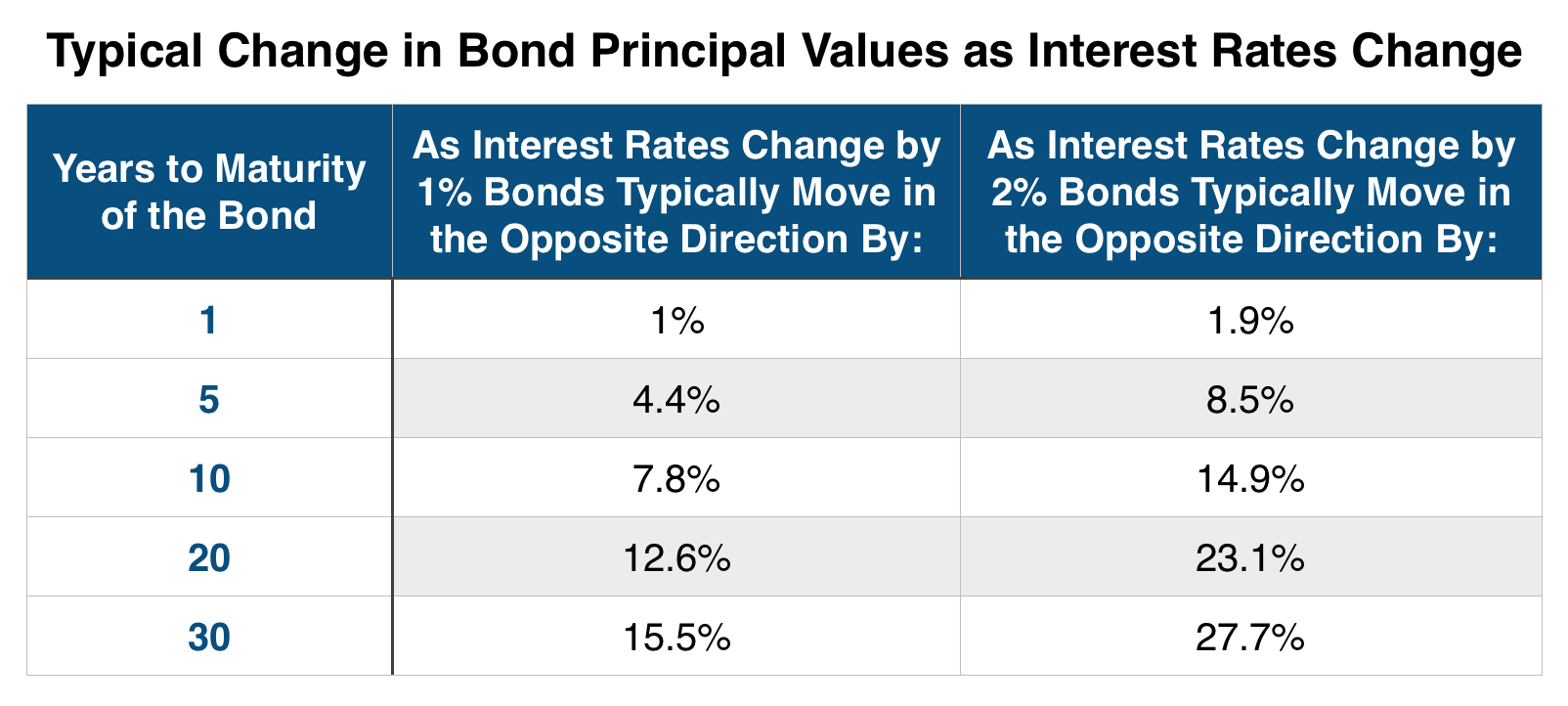
  • What happens with bond principal in relation to interest rates?
  • Can we control interest rates?
  • What about the “deadline” on the bond?
  • What happens with a 1% increase?
  • What happens with a 2% increase?
  • How does the risk go up?
  • What else can we do?
  • What about the volatility?
  • What about the risks baked into bonds?
  • What happens if a bond is called?
  • Would you like to reach out?
  • What are some alternative to bonds?
  • What is recurring premium whole life insurance?
  • What happens with compounding?
  • What happens when you need cash, with liquidity?
  • What about dollar cost averaging?
  • What about guarantees?
  • What about annuities?
  • What about the tax treatment?
  • What about single premium whole life insurance?
  • Have you heard Episode 91?
  • What about the tax treatment?
  • What about the potential penalties?
  • What is your risk score and how does it line up with your goals and objectives?
  • Would you like to know your risk score?
  • Would you like us to run your numbers?
  • What are people saying?
  • What does a realistic budget look like?
    • Let us know at Speakpipe.com/nyafp and we’ll send you a free book!

https://media.blubrry.com/nyafinancialpodcast/content.blubrry.com/nyafinancialpodcast/NYAFP_Episode_135.mp3

Episode 134: How To Protect Your Retirement from Lawsuits with Sarry Ibrahim

March 27, 2020 by Not Your Average Financial Podcast

https://media.blubrry.com/nyafinancialpodcast/content.blubrry.com/nyafinancialpodcast/NYAFP_Episode_134.mp3

Podcast: Play in new window | Download

Subscribe: Apple Podcasts | RSS

In this episode, we ask:

  • Do you know we’re so thankful for your questions?
  • What happens if you get into a lawsuit with a life insurance policy?
  • Who is Sarry Ibrahim?
  • What did Sarry learn from working with retirees?
  • How did asset protection become a focus for Sarry?
  • Are you exposed to things you can’t control?
  • Do you have money in safe and secure places?
  • Who is at risk?
  • What are the other risks?
  • What about the shake down?
  • What sort of lawsuits?
  • What are the most common claims?
  • How common are lawsuits in the U.S. each year?
  • What’s the chance you will be sued?
  • How does one protect themselves?
  • Have you googled the exempt assets in your state?
  • Which of your assets are exempt?
  • Which of your assets are non-exempt?
  • Are Bank on Yourself policies exempt?
  • What are the questions you need to ask?
    • Is this solution 100% asset protected?
      • How much will it cost to implement this solution? Are there any recurring costs?
      • What are the contribution limits?
      • Is it liquid? Can you access money anytime? What are the age or time restrictions?
      • Is it exposed to market volatility?
      • Can you integrate this plan into other areas of your life and business?
      • What is the tax exposure you have?
  • How do different vehicles compare?
  • What about a 401(k)?
  • Are there fees in a 401(k) or IRA?
  • Are there contribution limits in a 401(k) or IRA?
  • Is a 401(k) or IRA liquid and accessible?
  • How might a 401(k) or IRA integrate into other areas of life?
  • What is the tax liability on a 401(k) or IRA?
  • What about a Bank on Yourself type policy?
  • Is a Bank on Yourself type policy considered an exempt asset (in most states)?
  • What are the fees on a Bank on Yourself type policy?
  • What are the contribution limits on a a Bank on Yourself type policy?
  • Is a a Bank on Yourself type policy liquid and accessible?
  • Should you take a policy loan during a legal proceeding?
  • Will a policy loan go into your checking account?
  • Is a a Bank on Yourself type policy exposed to volatility?
  • Can you integrate a Bank on Yourself type policy into other areas of your life?
  • How might you use a Bank on Yourself type policy for real estate?
  • How might you use a Bank on Yourself type policy for investments?
  • How might you use a Bank on Yourself type policy for retaining employees?
  • How might you use a Bank on Yourself type policy for retirement planning?
  • What about the tax liability with a Bank on Yourself type policy?
  • What if tax rates go up?
  • Would you like learn more about Sarry and visit finassetprotection.com?
  • What happens when you’re coming “down the mountain” in retirement?
  • Are you a business owner?
  • Are you a lawyer?
  • Are you a real estate investor?
  • Are you prepared for a predator?
  • Are you prepared for a creditor?
  • Have you googled the exempt assets in your state?
  • What are people saying?
  • Would you like a FREE book?
  • Would you like to leave us a message at SpeakPipe before April 19, 2020?
    • What does a realistic budget look like?

Sarry Ibrahim graduated from Keller Graduate School of Management with an MBA in Project Management. He started his career at Allstate where he advised clients on auto, home, business, and life insurance. He then went on to become an independent broker, focusing on Medicare Supplement plans and Medicare Advantage plans, due to his passion for helping seniors. He has provided advice to hundreds on health insurance and Medicare. Having worked with seniors, Sarry has seen the struggle that many retirees go through when on fixed incomes as well as going through the hassle of being able to pay for long term care costs. Sarry is now helping individuals (not just seniors) plan for retirement, asset protection, and estate planning to avoid unnecessary risks and exposures to things outside of most people’s control. As a Bank on Yourself Authorized Agent, Sarry helps his clients achieve these results.


https://media.blubrry.com/nyafinancialpodcast/content.blubrry.com/nyafinancialpodcast/NYAFP_Episode_134.mp3

Episode 133: Client Spotlight: Engineers and Bank On Yourself® Superstars, Derek and Amy Baker

March 20, 2020 by Not Your Average Financial Podcast

https://media.blubrry.com/nyafinancialpodcast/content.blubrry.com/nyafinancialpodcast/NYAFP_Episode_133.mp3

Podcast: Play in new window | Download

Subscribe: Apple Podcasts | RSS

In this episode, we ask:

  • Who are Derek and Amy Baker?
  • How did Derek earn his first dollar on the horse farm?
  • How did Amy earn her first dollar while camping?
  • When did they start thinking beyond the employee mindset?
  • How did thinking about paying for college motivate them?
  • What sort of real estate investments do they hold?
  • What did they learn at the conference?
  • How did they meet Mark?
  • How are they saving for college?
  • What do they love about the concept?
  • Why did Derek and Amy choose to work with Mark?
  • What do they love about working with Mark?
  • What did they learn?
  • What about who you know?
  • What about who you like?
  • What about who you trust?
  • Is this too good to be true?
  • What about moderate and solid growth?
  • What about liquidity?
  • What about access?
  • What about government restrictions?
  • What about going against the grain?
  • What about building generational wealth?
  • How do they use their cash value?
  • How does this affect their real estate work?
  • How do they deploy cash?
  • What about property inspections?
  • What about traveling to the property?
  • What about putting money into the value add?
  • What about advertising cost?
  • What about Bridge loans?
  • What about repairs?
  • What’s the scariest part of banking on yourself?
  • What about the time to “brew”?
  • What does it feel like to be a financial weirdo?
  • Why did Derek and Amy get into real estate?
  • How do they set themselves up with multiple streams of income?
  • What was the wake up call?
  • How are they building assets?
  • How did the Bank on Yourself® type policies help them through difficult times?
  • What about the flexibility of the policies?
  • How does this feel like a safety net?
  • What about fees?
  • As engineers, how did Derek and Amy get past the initial cost of life insurance?
  • Is this unbelievable?
  • What about the power of Bank on Yourself® type policies?
  • What are Derek and Amy doing with real estate syndication?
  • Would you like to reach out to Derek and Amy?
    • info@jamtineinvestments.com
  • What advice do Derek and Amy have?
  • How might you be more active and present?
  • Are most people overly passive with their money?
  • When is the best time to take a step?
  • What do you love about Derek and Amy?
  • How do they use real estate investing AND Bank on Yourself® type policies?
  • How do Derek and Amy think out three generations?
  • What makes all of the difference?
  • Would you like a FREE book?
  • Would you like to leave us a review?
  • What are people saying?
  • Would you like to leave us a voice message before April 19, 2020? Our question is:
    • What does a realistic budget look like?

Derek and Amy Baker are Founder and Co-Founder of Jamtine Investments headquartered in Grand Blanc, MI. They currently own and manage a multifamily rental portfolio of 253 units in Michigan, Texas and Tennessee. Derek and Amy have been active in real estate since 2016 with an emphasis on apartment syndication. They are members of Think Multifamily led by mentors Mark and Tamiel Kenney. 

Derek and Amy are graduates of Michigan State University. They both currently work for General Motors as Engineers and both hold a Bachelor of Science degree in Mechanical Engineering and Master of Science degree in Engineering Management. They have three beautiful children Molly (4), Emma (2) and Brayden (8 months) along with their perfect rescue dog, Izzy.


https://media.blubrry.com/nyafinancialpodcast/content.blubrry.com/nyafinancialpodcast/NYAFP_Episode_133.mp3

Episode 129: What if the Real Scam is Wall Street?

February 21, 2020 by Not Your Average Financial Podcast

https://media.blubrry.com/nyafinancialpodcast/content.blubrry.com/nyafinancialpodcast/NYAFP_Episode_129.mp3

Podcast: Play in new window | Download

Subscribe: Apple Podcasts | RSS

In this episode, we ask:

  • Have you heard the saying, “When you point a finger at someone, you have three more fingers pointing back at you?”
  • What does Wall Street say?
  • Does Wall Street fit the definition of a scam?
  • What did Holly Johnson say in The Simple Dollar article entitled Four Reasons Whole Life Insurance Is Not Worth It?
  • What did a 2015 Consumer Reports article titled Is Whole Life Insurance Right For You say?
  • What about the advice given to eight-year-old Virginia O’Hanlon in 1897 by the New York Sun about Santa Claus?
  • How is life insurance the exact opposite of gambling?
  • How long are the insurance companies willing to make promises?
  • Does any other financial institution make this level of promises?
  • What other financial instruments offer these promises?
  • What is the primary purpose of whole life insurance?
  • What are life insurance companies doing all day long?
  • What is whole life insurance’s not-so-secret promise?
  • What did the DALBAR study say in 2018?
  • What did Fidelity say at the end of 2017?
  • What about the buy and hold strategy?
  • What do mutual funds advertise?
  • What are mutual fund investors actually receiving?
  • Are you in a Target Date Fund?
  • Which is the scam?
  • How much will taxes eat up income from retirement savings?
  • What is the difference between risk tolerance and risk capacity?
  • How would you feel with a 40% decline in your portfolio?
  • What’s the problem with a risk tolerance questionnaire?
  • Do the questionnaires reflect reality?
  • What if we change out risk tolerance questionnaires with a risk capacity score?
  • When can investors afford to take risks?
  • What would fundamentally change the financial planning industry?
  • How might you take bias and opinion out of your financial calculations?
  • What’s the money that you cannot afford to lose?
  • Why does Wall Street seem to think that insurance has no place in a portfolio?
  • Are you risking money you can’t afford to lose?
  • What’s your magic number?
  • Would you like us to find your magic number? 
  • Is there a purpose for every financial vehicle out there?
  • Are you skeptical of your own risk opinion?
  • What’s a favorite or memorable money mistake?
    • Let us know! Leave us a message
  • Would you like to leave us a review?
    • Email us a screenshot of your review and we will send you a FREE book!


https://media.blubrry.com/nyafinancialpodcast/content.blubrry.com/nyafinancialpodcast/NYAFP_Episode_129.mp3

Episode 121: A Strategy for RMDs

December 27, 2019 by Not Your Average Financial Podcast

https://media.blubrry.com/nyafinancialpodcast/content.blubrry.com/nyafinancialpodcast/NYAFP_Episode_121.mp3

Podcast: Play in new window | Download

Subscribe: Apple Podcasts | RSS

In this episode, we ask:

  • What is a Required Minimum Distribution (RMDs)?
  • What happened when you put your income into the deferred tax account?
  • How will the tax be paid?
  • When will the tax be paid?
  • What is built into the Internal Revenue Code?
  • When do Required Minimum Distributions become payable?
  • What about age 70.5?
  • What about age 59.5?
  • What is this magical 11 year time zone?
  • Do you own a qualified plan?
  • When you can you withdraw funds?
  • What about penalties?
  • Have you heard about the 70.5 deadline?
  • A 50% penalty?! 50%?!
  • When do you think taxes will be higher?
  • What happens if you pass away with a qualified plan?
  • What does your partner have to do?
  • Would you like an example?
  • How does one calculate an RMD?
  • What is your life expectancy?
  • What is the balance of the account?
  • Are RMDs taxed at ordinary income tax rates?
  • Is your spouse 10 years younger than you?
  • Will RMDs force you into a higher tax bracket?
  • Will RMDs raise your Medicare premiums?
  • What if you have assets inside of your qualified accounts?
  • Will you have to sell your stocks?
  • Will you have to sell your real estate?
  • Does the RMD care?
  • What happens if you live past your life expectancy?
  • What happens if you need it for long term care?
  • What about the 4% rule?
  • How successful is the 4% rule?
  • What about 2.8%?
  • What about 6.5%?
  • Has the government updated their formula to reflect these new findings?
  • Will most run out of money?
  • What is the new SECURE ACT in congress?
  • What are some ideas to consider?
  • Are you in your mid to late 50s?
  • How much do you have that will be exposed to ordinary income tax?
  • Would you like protection from required minimum distributions?
  • Are there multiple accounts that you would like to consolidate?
  • How might you leave a substantial legacy for your children?
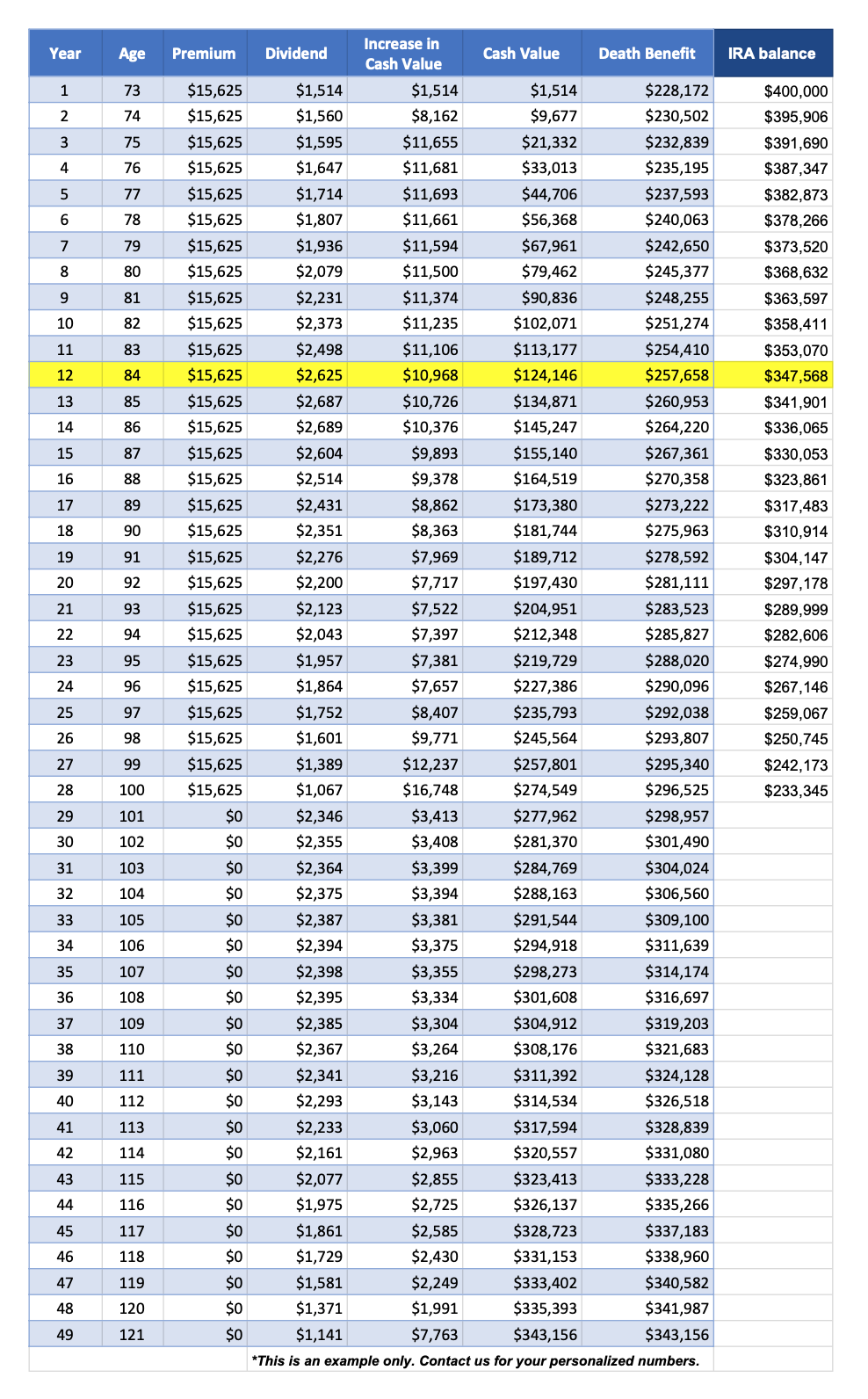
  • What about a life insurance policy?
  • Are today’s tax rates historically low?
  • How much will you be forced to take out of your retirement accounts?
  • How could you leave your family far more than you ever saved?
  • Would you like to view some example numbers? Note: this is only an example. To see your exact numbers, please contact us.
  • How might we help you with an RMD strategy? Hop on our calendar for a FREE 15 minute Introduction Phone Call
  • Do you own a Bank on Yourself® type policy? Do you believe that Bank on Yourself is a scam? Leave us a message and let us know your experience!

https://media.blubrry.com/nyafinancialpodcast/content.blubrry.com/nyafinancialpodcast/NYAFP_Episode_121.mp3
Prev Page...
...Next Page

Sign Up to Receive Weekly Email Notifications

Not Your Average Financial Podcast
  Thank you for Signing Up
  Please correct the marked field(s) below
1,true,6,Contact Email,2
1,false,1,Last Name,2

Copyright © 2026 · Maron Pro Theme on Genesis Framework · WordPress · Log in