Podcast: Play in new window | Download
Subscribe: Apple Podcasts | RSS
In this episode, we ask:
- What is a wonder and a privilege?
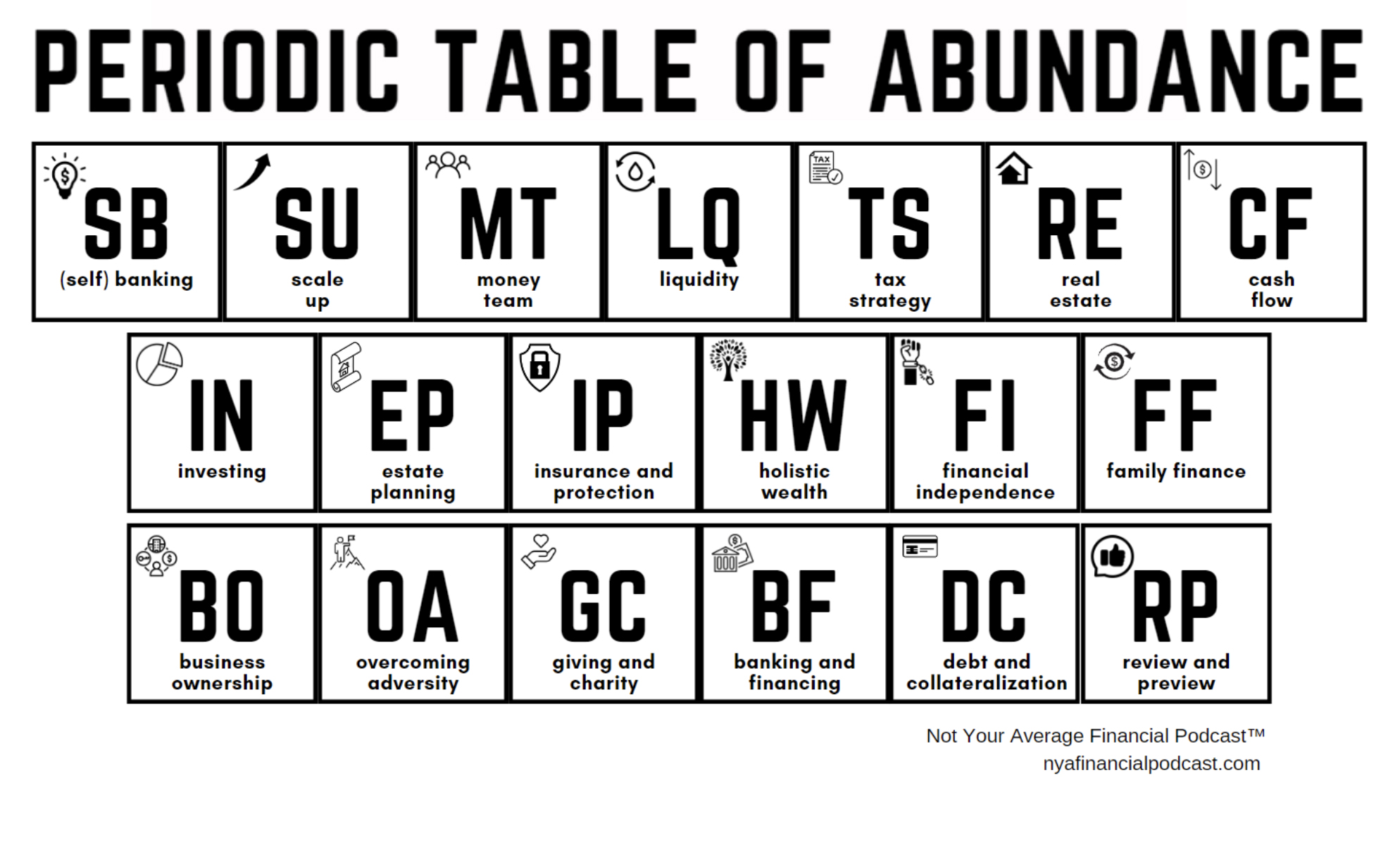
- What are the elements that make up a truly abundant life?
- Would you like to get the special report on the Periodic Table of Abundance? Would you like to Request a Meeting?
- Have you listened to the previous episodes in this series?
- Would you like to hear Episode 330: No.1 Scaling Up and Overcoming Adversity?
- Would you like to hear Episode 331: No.2 Money Team, Family Finance and Estate Planning?
- Would you like to hear Episode 332: No.3 Liquidity and Cash Flow?
- Would you like to hear Episode 333: No.4 Secrets of Leverage with Insurance and Banking?
- Would you like to hear Episode 334: No.5 Achieve Your Ultimate Potential with Investing and Real Estate
- Would you like to hear Episode 335: No.6 Building a Better World Through Business Ownership, Tax Strategy and Giving
- Would you like to hear Episode 336: No.7 Financial Independence and the Magic of Collateralization
- What makes up the pursuit of abundance in your life?
- What is holistic wealth?
- What about healthy relationships?
- What about influence?
- Would you like to hear Episode 326?
- What did Rabbi Daniel Lapin say in Episode 186 and in his book, The Holistic You?
- What about Faith?
- What about Fitness?
- What about Family?
- What about Finances?
- What about Friends?
- What are the four currencies of our life?
- How about money?
- What about time?
- How is your energy?
- What or who has your attention?
- Would you like to hear Episode 324?
- What did Jim Rohn say?
- What about review and preview?
- What about living in the present?
- What about the future?
- What about reviewing over and over again?
- What is a myth?
- What about reconciling the budget?
- What about cash flow planning?
- What did Nelson Nash say?
- Can you control the financial environment where your money lives?
- What is the most profitable thing?
- What about effective reflection?
- What about Thinking Time from the book The Road Less Stupid by Keith Cunningham?
- What are the unasked questions?
- How might I… so that I can… ?
- How did it get this way?
- Why does it stay this way?
- How can I improve the way it works or the way it looks?
- What in your financial life needs to be broken, so you can find better solutions?
- What are the right questions?
- What is genius?
- What happens when you get the right question?
- What don’t I see?
- What are the (unintended) second order consequences?
- What happened in India when the British implemented the snake eradication program?
- What will happen if this goes sideways?
- What is the upside?
- What is the downside?
- Can I live with the downside?
- What about creating a machine?
- What about implementation?
- What will you do?
- What about a 1% improvement?
- What about an adventure of a lifetime?

 John Ensley is president of JEnsley Financial, a fiduciary, financial planning company and Registered Investment Advisor. John holds a Chartered Financial Consultant® designation from the American College of Financial Services and is one of an elite group of highly trained Bank On Yourself® Professionals.