Not Your Average Financial Podcast™

Think different about your money, your economy and your future. Be curious. Be stable. Be sane.

Episode 85: The Tax Sale of A Lifetime

April 19, 2019 by Not Your Average Financial Podcast

https://media.blubrry.com/nyafinancialpodcast/content.blubrry.com/nyafinancialpodcast/NYAFP_Episode_85.mp3

Podcast: Play in new window | Download

Subscribe: Apple Podcasts | RSS

In this episode, we ask:

  • What do you think about where taxes are headed in the future?
  • What does the society of actuaries say?
  • What does “tax deferred” mean?
  • Does it matter if you take taxes out now or later?
  • How much of your retirement account will be there for income in retirement?
  • What does your retirement account allow after tax?
  • Why do so many Americans have tax deferred plans?
  • Why do Certified Professional Accountants (CPAs) recommend tax deferred plans?
  • What timeline do CPAs operate on?
  • Do we eliminate taxes with tax deferred plans?
  • Why don’t we call them “tax-postponed” plans?
  • What about the tax reform?
  • How much did the tax reform increase the national deficit?
  • Should we preemptively pay our taxes now or wait until the distant future?
  • What happens to taxes on January 1, 2026?
  • What does “maxing out your tax bracket” mean?
  • What about tax free IRAs?
  • What strategies should you bring to your tax expert?
  • What are tax penalties?
  • Are you over or under age 59.5?
  • Where is your IRA invested?
  • Do you think there will be a stock market correction?
  • On average, how much does the stock market drop?
  • Why are we willing to take a 10% stock market drop?
  • Why do we avoid the 10% early withdrawal penalty?
  • Does it make sense to spend money for a larger return?
  • What are the three specific tax steps?
  • What about deductions for business owners?
  • What does Section 179 say about purchasing heavy vehicles and other equipment?
  • What about depreciation?
  • What about rental spaces?
  • What about tax advantaged strategies?
  • Are you incorporated as an S Corporation?
  • What about tax savings for individuals?
  • When do you plan to retire?
  • Are your RMDs below the standard deduction?
  • Do you have a pension?
  • Do you have a tax deferred plan?
  • Do you have your children as contingent beneficiaries?
  • Is the IRS a beneficiary on your tax deferred account?

Remember! This episode provides generalized tax information and is NOT considered the same as the professional tax advice you will receive from your CPA. We are not CPAs, and we don’t play them on T.V.


Please consult your CPA or tax expert for professional tax advice and insight into your specific situation.


https://media.blubrry.com/nyafinancialpodcast/content.blubrry.com/nyafinancialpodcast/NYAFP_Episode_85.mp3

Episode 84: The Past, Present and Future of Paying Your Taxes

April 12, 2019 by Not Your Average Financial Podcast

https://media.blubrry.com/nyafinancialpodcast/content.blubrry.com/nyafinancialpodcast/NYAFP_Episode_84.mp3

Podcast: Play in new window | Download

Subscribe: Apple Podcasts | RSS

In this episode, we ask:

  • What does THEIRS stand for?
  • When did the income tax begin in the U.S.?
  • Why was the income tax established?
  • How can you save taxes legally?
  • What can you do?
  • What options do you have?
  • Are taxes currently high or low?
  • What were the tax brackets in 1929? in 1940? in 1942? in 1944?
  • Why the massive increases?
  • What happened with incomes and inflation?
  • What are victory taxes?
  • What are excise taxes?
  • When did withholding start?
  • What happened in 1946?
  • What reductions occurred after the war?
  • What is bracket creep?
  • How is inflation a stealth tax?
  • How much has the deficit grown?
  • Which is greater in the U.S., student debt or credit card debt?
  • How much do students owe?
  • Will military spending decrease domestic spending?
  • Who will pay for these rising expenses?
  • What about healthcare?
  • Who will cover the expenses for the elderly among us?
  • What about the interest on the national debt?
  • How much will the government spend on interest alone?
  • Do you think taxes will be lower or higher in the future?
  • Do you want to pay those taxes?
  • Would you like to watch our private webinar on tax?

https://media.blubrry.com/nyafinancialpodcast/content.blubrry.com/nyafinancialpodcast/NYAFP_Episode_84.mp3

Episode 53: A New Perspective with Les Himel (Part 2)

September 7, 2018 by Not Your Average Financial Podcast

https://media.blubrry.com/nyafinancialpodcast/content.blubrry.com/nyafinancialpodcast/NYAFP_Episode_53.mp3

Podcast: Play in new window | Download

Subscribe: Apple Podcasts | RSS

In this episode, we ask:

  • If compounding stumbles, do we gain or do we lose?
  • What troubles has Les Himel experienced with Wall Street?
  • What is macrodiversification?
  • What is microdiversification?
  • What about mutual funds?
  • What about bonds?
  • What about stocks?
  • How do we improve on a portfolio?
  • How do we turn our portfolio into a business model instead of Wall Street model?
  • What is 7702 of the tax code and why is it important?
  • How do you minimize volatility?
  • How does minimizing volatility benefit compounding?
  • What is the fabric of our society?
  • How is life insurance regulated?
  • What are the important specifics?
  • How does an insurer participate in the market?
  • What is the dividend pool? How is calculated?
  • What is the type of tax-free growth that Les has seen in the last 20-30 years?
  • What is the cumulative rate of return on the S&P? How does this affect results?
  • What should be the core of a portfolio?
  • How can you know what the reasonable outcome will be as you age?
  • What are you going to do to become wealthy? How can you make sure?
  • How does money affect sleep?
  • What are the three major ages in our life?
  • What are some typical pitfalls at each stage?
  • If we have a 401(k), what happens to our family if we die?
  • What are the takeaways?

Lester N. Himel discovered the use of specific types of Life Insurance to enhance and expand the performance of investment portfolios several years ago; this after spending 28 years in a variety of positions on Wall Street. Like most financial professionals, he considered stocks, bonds and similar instruments as the core of a reasonable investment approach. In those last several years, Les has found the better way.

Les comes to this field with a very broad financial background. He started as a compliance officer, worked in administration, was an institutional bond trader, developed an Emerging Markets business, and was also involved with “alternative investments”. Now, as one of only 200 Bank on Yourself authorized advisors, and with his ability to integrate far-reaching insights, he guides clients to financial success. Les prefers low risk and “guarantees”, and has an ability to simplify explanations of what, why and how. Les has achieved various FINRA registrations, and is a Chartered Financial Consultant (ChFC).
Lester resides in Westchester County, New York with his family and stays very busy working with clients across the country.


https://media.blubrry.com/nyafinancialpodcast/content.blubrry.com/nyafinancialpodcast/NYAFP_Episode_53.mp3

Episode 52: A New Perspective with Les Himel (Part 1)

August 31, 2018 by Not Your Average Financial Podcast

https://media.blubrry.com/nyafinancialpodcast/content.blubrry.com/nyafinancialpodcast/NYAFP_Episode_52.mp3

Podcast: Play in new window | Download

Subscribe: Apple Podcasts | RSS

In this episode, we ask:

    • What has Les Himel learned in his 28 years on Wall Street?
    • What are the myths of standard conventional wisdom?
    • What are the rules of thumb we should always be able to rely on?
    • Can you get 10% or more per year in the market?
    • How much lower will taxes go?
    • What was the highest marginal tax rate in recent history?
    • How does anyone pay over 90% in taxes?
    • What happens when you go up in scale on your income?
    • Will you be in a different tax bracket in the future?
    • Are you looking at your finances in a 1 or 2 year time frame or in a 30, 40, 50 year time frame?
    • What are the realities of the stock market?
    • What is a cumulative rate of return?
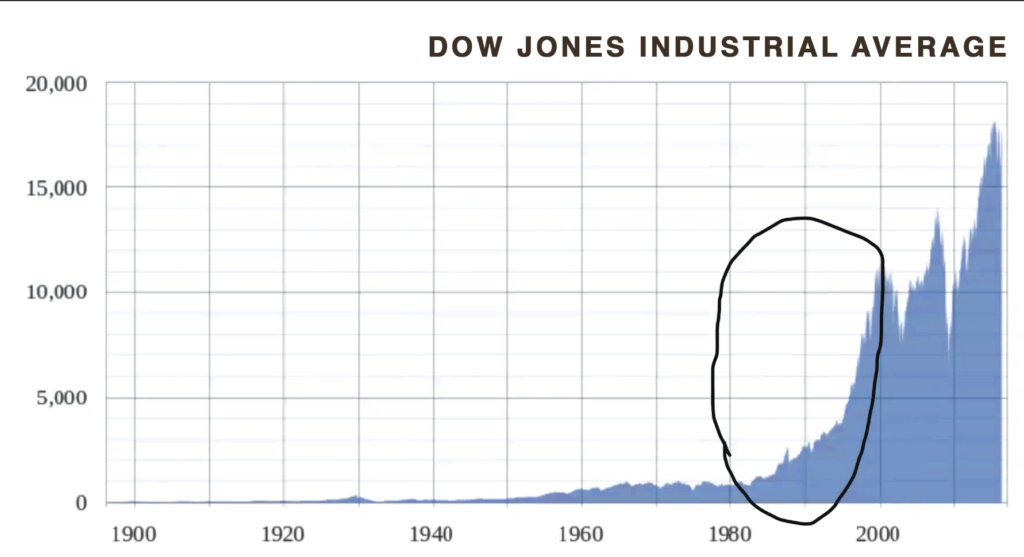
    • How much was the cumulative rate of return on the DOW from 1900-1980?
    • What about 1980-2000? Why does Les call this time the “roaring 20”?
    • What happened on Black Monday?
    • What was the average climb during the 1980-2000 period?
    • What’s the story with the 401(k) in the 80s?
    • What are arithmetic averages?
    • What is a return?
    • What is the difference between a return and a change?
    • When do you truly receive a return?
    • Does your investment advisor take fees and taxes into account when they present an update to you?
    • How does volatility affect your future?
    • What’s the difference between an average and real dollars?
    • How can you calculate the change of how much you’ve really made or lost?
    • If you take the Standard and Poor’s Index (the S&P) from December 31, 2000 until the changes of December 31, 2016, what happened with volatility, and what was the average rate of return?
    • How do investment advisors anticipate the future earnings?
    • Do stocks perform in a straight line?
    • How can the cumulative rate of return help make sense of actual performance?
    • How can you check your math?
    • How does the math of the rate of return vs. the cumulative rate of return affect you?
    • Are you willingly putting up with the volatility, the fees and taxes for a whopping 3.35% return?
    • How does this affect pension funds and 401(k)s?
    • What is the reality?
    • What’s the difference between what we think we know and what we actually see?
    • When you look at the math, what do you come up with?
    • Do you have time to make it up?
    • Is compounding flexible?
    • Why does volatility destroy compounding?
    • Do stocks and bonds narrow volatility?

Lester N. Himel discovered the use of specific types of Life Insurance to enhance and expand the performance of investment portfolios several years ago; this after spending 28 years in a variety of positions on Wall Street. Like most financial professionals, he considered stocks, bonds and similar instruments as the core of a reasonable investment approach. In those last several years, Les has found the better way.

Les comes to this field with a very broad financial background. He started as a compliance officer, worked in administration, was an institutional bond trader, developed an Emerging Markets business, and was also involved with “alternative investments”. Now, as one of only 200 Bank on Yourself authorized advisors, and with his ability to integrate far-reaching insights, he guides clients to financial success. Les prefers low risk and “guarantees”, and has an ability to simplify explanations of what, why and how. Les has achieved various FINRA registrations, and is a Chartered Financial Consultant (ChFC).
Lester resides in Westchester County, New York with his family and stays very busy working with clients across the country.


https://media.blubrry.com/nyafinancialpodcast/content.blubrry.com/nyafinancialpodcast/NYAFP_Episode_52.mp3

Episode 30: Will You Pay Tax on the Seed or the Harvest?

March 30, 2018 by Not Your Average Financial Podcast

https://media.blubrry.com/nyafinancialpodcast/content.blubrry.com/nyafinancialpodcast/NYAFP_Episode_30.mp3

Podcast: Play in new window | Download

Subscribe: Apple Podcasts | RSS

In this episode, we ask:

  • What is the “Rich People’s Roth?”
  • Are there required minimum distributions (RMDs) on ROTH IRAs?
  • What other elements make up a ROTH IRA?
  • What accounts have contribution limits?
  • What accounts can you contribute to tax free and take distributions tax free?
  • What’s smaller? The seed or the harvest?
  • Would you like to defer your taxes?
  • Would you like to pay your taxes now?
  • Are taxes going up?
  • How can you get access to a death benefit while you’re still alive?
  • How do Long Term Care policies work?
  • Do you need Long Term Care?
  • What is the average cost of a nursing home today?
  • Do you know how much your taxes are going to be this year?
  • Will you get a refund? What happens to the refund?
  • Can you use a Bank On Yourself policy for taxes?
  • What about Self Employed individuals?
  • Would you rather prefer a dollar today or a dollar tomorrow?
  • Do you have to prove to the IRS that that’s your money?
  • How will your bigger paycheck affect your taxes?
  • Have you gone to the IRS website to see what your estimated taxes will be?
  • Are you giving the IRS a no interest loan?
  • Are you proud when you receive a tax refund?

https://media.blubrry.com/nyafinancialpodcast/content.blubrry.com/nyafinancialpodcast/NYAFP_Episode_30.mp3

Episode 29: Tax Advantages with Bank on Yourself

March 23, 2018 by Not Your Average Financial Podcast

https://media.blubrry.com/nyafinancialpodcast/content.blubrry.com/nyafinancialpodcast/NYAFP_Episode_29.mp3

Podcast: Play in new window | Download

Subscribe: Apple Podcasts | RSS

In this episode, we ask:

  • Is there someone at the IRS who you’re particularly fond of?
  • Do you have more than one beneficiary on your IRA or 401(k)?
  • What did we mention over and over in our last episodes?
  • Are taxes likely to go UP or DOWN in 2025?
  • What changes can we anticipate?
  • What are the tax advantages from Bank on Yourself?
    • How are distributions taxed from Bank on Yourself policies?
  • Would you like Tax Free Retirement Distributions and Withdrawals?
  • Would you like to take the anxiety and guesswork out of retirement?
  • Do I have to hold on to the S&P with white knuckles?
  • What are the two key unknowns in the government-sponsored qualified plans?
  • How do Bank on Yourself policies grow?
  • How are Bank on Yourself policies like ROTH plans?
  • How do dividends affect policy performance?
  • How do you access cash value tax free?
  • How do you pay your taxes now on life insurance premiums?
  • Will you get a 1099 for the growth in your life insurance policy?
  • How many withdrawals can you take from a policy without any tax consequences?
  • Once you’ve exceeded the cost basis, how can you get money from the policy tax free?
  • What about the possibility of a policy lapse?
  • What about the horror stories?
  • How do you know you’re working with the right advisor?
  • What are some ways we can avoid lapse?
  • What happens to couples who earn over $44K annually?
  • What’s the problem with required minimum distributions (RMDs)?
  • How does a Bank on Yourself plan affect your capacity to apply for student aid?
  • How do business owners use Bank on Yourself policies for paying taxes and financing big purchases?
  • What is the tax treatment for a death benefit?
  • What are the tax implications with an inherited IRA?
  • How are life insurance death benefits treated in probate court?
  • Can creditors and predators come after money in probate court?
  • Can creditors and predators come after death benefits?
  • Can you save as much as a death benefit?
  • What inheritance options are drama free?

https://media.blubrry.com/nyafinancialpodcast/content.blubrry.com/nyafinancialpodcast/NYAFP_Episode_29.mp3

Episode 28: Hug Your CPA and your IRS Agent

March 16, 2018 by Not Your Average Financial Podcast

https://media.blubrry.com/nyafinancialpodcast/content.blubrry.com/nyafinancialpodcast/NYAFP_Episode_28.mp3

Podcast: Play in new window | Download

Subscribe: Apple Podcasts | RSS

In this episode, we ask:

  • What is going on with the new tax law (the Tax Cuts and Jobs Act)?
  • What’s new with personal taxes?
  • What does the tax code encourage?
  • Where are the tax breaks?
  • How is the effective tax rate different from the marginal tax rate?
  • How does this affect the Mortgage Interest Deduction?
  • How much will this raise the federal deficit?
  • What about the Affordable Care Act / Obamacare tax?
  • How does this affect the socioeconomic structure in the U.S.?
  • What is the hope of the tax law?
  • What about the Estate Tax?
  • What about the Child Tax Credit?
  • What’s the difference between the credit and a deduction?
  • How do we stack up compared to the rest of the world in corporate tax rates?
  • What’s new with corporate taxes?
  • What are the updates with pass-through income?
  • What happens to the net interest deduction?
  • What about the carried interest loophole?
  • What are some of the areas where it’s all stayed the same?
  • Tax handling of Qualified Plans will continue unchanged (529s may be accessible for K-12 tuition needs, this varies by state.)
  • Will more people choose the standard deduction over itemized deductions?
  • Will people continue charitable giving?
  • Did the new law simplify the code?
  • Does the new tax law truly provide cuts?
  • Are you seeing an increase in take-home pay with the tax shift?
  • Why is the word “Jobs” in the title?
  • Are we in the lowest tax brackets of our lifetimes right now?
  • When do most of these changes expire?
  • What should we be doing with our money in light of these temporary changes?
  • Is this the best time to be deferring taxes?
  • How is every 401(k) being taxed?
  • What is something we can pay the tax on TODAY, so we don’t have to pay tax on it in the future?
  • How many trillion dollars is currently sitting in qualified accounts?
  • What is the amount of the government’s unfunded liabilities?

Note: We are not tax experts. Please consult your CPA, your attorney and your tax specialists as you navigate the new tax law.


Single filers, 2018-2025
Taxable income over Up to Marginal rate
$0 $9,525 10%
$9,525 $38,700 12%
$38,700 $82,500 22%
$82,500 $157,500 24%
$157,500 $200,000 32%
$200,000 $500,000 35%
$500,000 And up 37%
Heads of household, 2018-2025
Taxable income over Up to Marginal rate
$0 $13,600 10%
$13,600 $51,800 12%
$51,800 $82,500 22%
$82,500 $157,500 24%
$157,500 $200,000 32%
$200,000 $500,000 35%
$500,000 And up 37%
Married couples filing jointly, 2018-2025
Taxable income over Up to Marginal rate
$0 $19,050 10%
$19,050 $77,400 12%
$77,400 $165,000 22%
$165,000 $315,000 24%
$315,000 $400,000 32%
$400,000 $600,000 35%
$600,000 And up 37%
Married couples filing separately, 2018-2025
Taxable income over Up to Marginal rate
$0 $9,525 10%
$9,525 $38,700 12%
$38,700 $82,500 22%
$82,500 $157,500 24%
$157,500 $200,000 32%
$200,000 $300,000 35%
$300,000 And up 37%

Source: Joint Committee on Taxation.

https://media.blubrry.com/nyafinancialpodcast/content.blubrry.com/nyafinancialpodcast/NYAFP_Episode_28.mp3
Prev Page...

Sign Up to Receive Weekly Email Notifications

Not Your Average Financial Podcast
  Thank you for Signing Up
  Please correct the marked field(s) below
1,true,6,Contact Email,2
1,false,1,Last Name,2

Copyright © 2026 · Maron Pro Theme on Genesis Framework · WordPress · Log in