Not Your Average Financial Podcast™

Think different about your money, your economy and your future. Be curious. Be stable. Be sane.

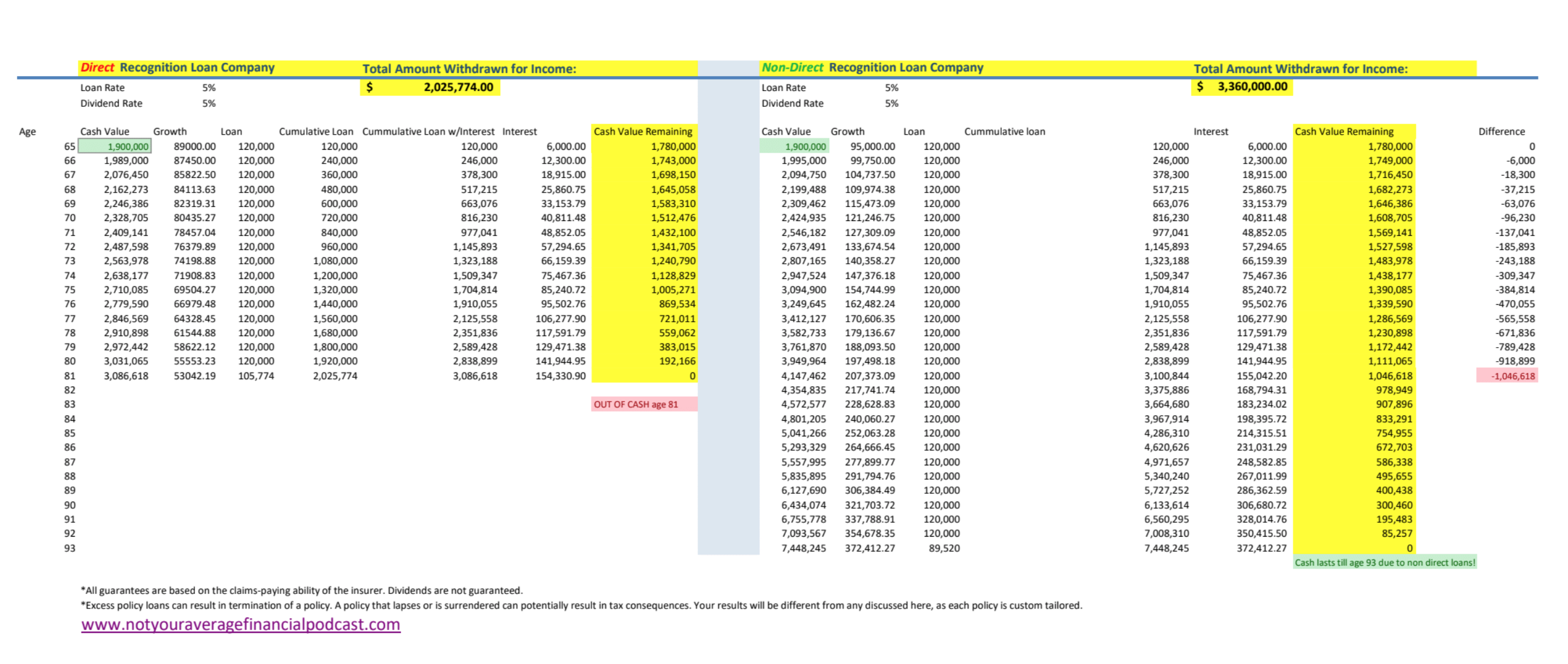
Episode 83: How to Maximize Your Retirement Income

April 5, 2019 by Not Your Average Financial Podcast

https://media.blubrry.com/nyafinancialpodcast/content.blubrry.com/nyafinancialpodcast/NYAFP_Episode_83.mp3

Podcast: Play in new window | Download

Subscribe: Apple Podcasts | RSS

In this episode, we ask:

  • How much peace and financial stability can you have?
  • How do oceans and rivers work together?
  • How do we benefit from systems?
  • Are annuities good for liquid access?
  • How can we solve immediate cash needs?
  • Where could you possibly keep an OCEAN OF MONEY?
  • How does a Bank on Yourself type policy work with annuities?
  • What spreadsheet did Holly create?
  • What is direct recognition?
  • What is non-direct recognition?
  • How does direct or non-direct recognition work?
  • Do you have a dividend paying whole life insurance contract?
  • Do you have a provision for non-direct recognition policy loans?
  • Do all insurance companies encourage policy holders to take policy loans?
  • Why is so important to work with the right advisors?
  • What can be buried in the contract provisions?
  • How do policy loans work? Have you heard Episode 32?
  • How can you overcome opportunity cost?
  • Does your policy have a TRUE non-direct recognition provision?
  • How can you get your money do two things at once?
  • Can you imagine growing your cash (even when you’ve spent it)?
  • How can your hard earned dollars work hard for you?
  • What if you had $1M in an annuity and $1M in a Bank on Yourself type Whole Life Insurance policy?
  • What happens when the account value is gone?
  • What is an ideal safe withdrawal rate?
  • How can you protect against running out of money?
  • What if we spend down the whole life policy earlier and allow the annuity to keep growing?
  • Which vehicles give you the most income in retirement?
  • Where are the guarantees in the stock market?
  • Is it possible to predict what the market will do?
  • Who is better at choosing stocks? Hedge fund managers or monkeys?
  • Would you like peace of mind?
  • Would you like your money to be there for you no matter what happens?
  • What are people saying?
  • Would you like to send us a review?
  • Would you like a free copy of the Bank on Yourself Revolution book?
  • Email us at hello@nyafinancialpodcast.com
  • Would you like to book a meeting with Mark?

https://media.blubrry.com/nyafinancialpodcast/content.blubrry.com/nyafinancialpodcast/NYAFP_Episode_83.mp3

Episode 79: The Hidden Problems of Living Too Long

March 8, 2019 by Not Your Average Financial Podcast

https://media.blubrry.com/nyafinancialpodcast/content.blubrry.com/nyafinancialpodcast/NYAFP_Episode_79.mp3

Podcast: Play in new window | Download

Subscribe: Apple Podcasts | RSS

In this episode, we ask:

  • What is a necessary risk?
  • What is an unnecessary risk?
  • Do you need a side hustle?
  • How do we manage risk?
  • Where do we need to go from here?
  • What is FINRA?
  • What are the 21 categories of risk from FINRA?
  • What are the two types of risk?
  • What is an example of pure risk?
  • What is an example of speculative risk?
  • What is purchasing power risk?
  • What is the consumption assumption?
  • Do you spend more on your days off?
  • How much do you expect the cost of consumer goods to increase over the next 20 or 30 years?
  • How much have health insurance premiums risen since 1999?
  • Will health care costs eat up your retirement income?
  • What about systemic risk or market risk?
  • Does staying in the market longer protect you?
  • Would you like to review Episode 51: Does Buy and Hold Work?
  • Would you like to review Episode 52: A New Perspective with Les Himel (Part 1)?
  • Would you like to review Episode 53: A New Perspective with Les Himel (Part 2)?
  • Are you exposed to political risk or tax risk?
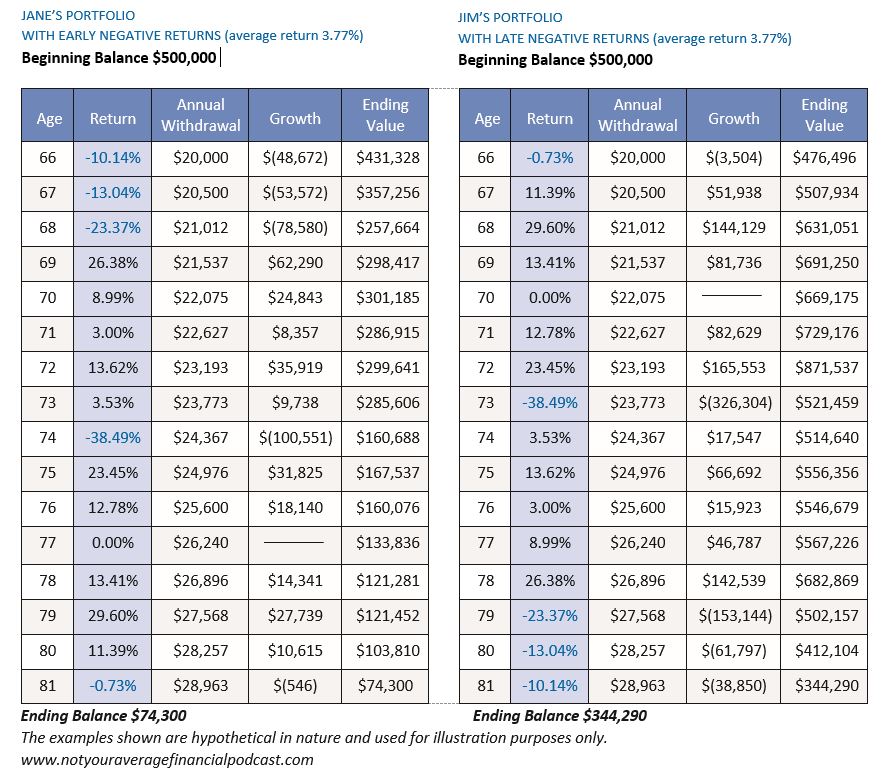
  • What about the risk inherent with sequence of returns?
  • What about the average rate of return?
  • What about the IRA money being allocated to a nursing home?
  • What about the risk of elder fraud in your senior years?
  • What about the death of a spouse?
  • What about the risk of dismissing long term care?
  • How much does long term care typically cost?
  • What are the unavoidable risks?
  • Which of these risks is the most important?
  • What about the risk of living too long?
  • How do you protect against living too long?
  • What is protected income?
  • What if you could create a passive income stream, that even if you run out of money, you would never run out of money?

sequence of returns

https://media.blubrry.com/nyafinancialpodcast/content.blubrry.com/nyafinancialpodcast/NYAFP_Episode_79.mp3

Episode 78: What’s So Secure About Social Security with Bill Rainaldi, CFP®

March 1, 2019 by Not Your Average Financial Podcast

https://media.blubrry.com/nyafinancialpodcast/content.blubrry.com/nyafinancialpodcast/NYAFP_Episode_78.mp3

Podcast: Play in new window | Download

Subscribe: Apple Podcasts | RSS

In this episode, we ask:

  • Who is Bill Rainaldi?
  • What is Social Security? When was it started?
  • How much of your income is withheld from your pay for Social Security?
  • How does Medicare factor in?
  • What is the average Social Security income?
  • Can you rely on Social Security in retirement?
  • How long do you have to work before you qualify for Social Security?
  • What is a spousal benefit?
  • What are the mistakes people make with Social Security?
  • How much do these mistakes cost?
  • Are the Social Security personnel unable to give financial advice?
  • What is a survivor benefit?
  • Why is it important to consider your spouse in the decision on when to claim the benefit?
  • What if there is an age difference with the spouse?
  • What is the earnings test?
  • What is the most common age for people choosing to receive the benefit?
  • What happens if you’re still working?
  • Are you trying too hard to get the maximum benefit?
  • How does the formula work?
  • Who benefits more from Social Security – a high or low income person?
  • What is the rate Social Security benefits are taxed at?
  • Are you making too much in income?
  • Is Medicare free?
  • What about Medicare Part B?
  • What is MAGI?
  • How can you manage your benefits properly?
  • What about Medicare Part D?
  • How do you stay below certain thresholds?
  • Can your Social Security benefit go down?
  • What about brackets?
  • Will Social Security be around in the future?
  • What is happening with the retirement age?
  • What action steps can you take to better prepare for Social Security?
  • Can you live on Social Security benefits alone?
  • Have you and your spouse visited ssa.gov to find your best claim option?
  • Would you like a free Social Security analysis? Book A Meeting


A Lehigh University graduate, William Rainaldi is a Regional Vice President for Security Mutual Life Insurance Company of Binghamton, NY. He is a leading U.S. authority on Social Security and its impact on retirement planning. He has an extensive background in life insurance, business & investment concepts and computer technology.

In 2015 he was the featured presenter in a series of Social Security webinars sponsored by Trusts and Estates magazine and Wealthmangement.com. In 2017, he was a featured guest on Laura Adams’ Money Girl podcast, produced by Macmillan Publishing.

Mr. Rainaldi is a Certified Financial Planner™ and an Accredited Estate Planner (AEP). He is married with three children and two grandchildren. You can reach Bill via email at WRainald@SMLNY.com.

https://media.blubrry.com/nyafinancialpodcast/content.blubrry.com/nyafinancialpodcast/NYAFP_Episode_78.mp3

Episode 62: #FIRE Extinguishers with Brandon and Amanda Neely

November 9, 2018 by Not Your Average Financial Podcast

https://media.blubrry.com/nyafinancialpodcast/content.blubrry.com/nyafinancialpodcast/NYAFP_Episode_62.mp3

Podcast: Play in new window | Download

Subscribe: Apple Podcasts | RSS

In this episode, we ask:

  • Who are Brandon and Amanda Neely?
  • Grandma’s Wealth Wisdom Podcast
  • What is the F.I.R.E. strategy?
  • What does F.I.R.E. stand for?
  • How does one know they’re F.I.R.E.d?
  • How do you calculate your freedom number?
  • What are the pros of people going for this strategy?
  • What are the downsides of F.I.R.E. ?
  • What things do the F.I.R.E. people take off the table?
  • If someone was trying to retire early, how does one avoid the pitfalls?
  • What are the F.I.R.E. extinguishers?
    • Have you considered Tax Deferred Plan penalties?
    • Have you considered the Stock Market risks?
    • Have you considered the possibility of tax increases?
    • Have you considered the possibility of rising inflation?
    • Have you considered the fees?
    • Have you considered future medical expenses?
    • Have you considered Long Term Care expenses?
    • Have you considered unexpected large expenses?
    • Have you considered opportunity cost?
  • What are the perfect matches – the F.I.R.E. starters?
    • Bank on Yourself type life insurance policies
    • Access the money without penalty
    • Uninterrupted compound growth
    • No double tax payments
    • Hedge against inflation
    • Pay fees up front
    • Coverage for Long Term Care
    • Can make large purchases
    • Have growth continuing while you use the money for expenditures
  • What are other options?
    • Why is access without penalty crucial?
    • What did Brandon and Amanda do with their dividend paying whole life insurance policy?
    • How did this put them in a really good position?
    • What would Grandma say about this concept?
    • Did a single Grandma own a 401(k)?
    • What does retirement look like?
    • Contact Brandon and Amanda and subscribe to the Grandma’s Wealth Wisdom podcast at GrandmasWealthWisdom.com

    Amanda and Brandon Neely are small business and financial professionals.  They founded and ran Overflow Coffee Bar, L3C from 2008 through 2018.  Now, they share their experiential knowledge through podcasting and through developing personalized financial strategies for individuals and couples.  Their goal is to help people build wealth – the sort of wealth that would make their Grandma proud.  Subscribe to hear more at Grandma’s Wealth Wisdom podcast or wherever great podcasts are found. 

    https://media.blubrry.com/nyafinancialpodcast/content.blubrry.com/nyafinancialpodcast/NYAFP_Episode_62.mp3

    Episode 53: A New Perspective with Les Himel (Part 2)

    September 7, 2018 by Not Your Average Financial Podcast

    https://media.blubrry.com/nyafinancialpodcast/content.blubrry.com/nyafinancialpodcast/NYAFP_Episode_53.mp3

    Podcast: Play in new window | Download

    Subscribe: Apple Podcasts | RSS

    In this episode, we ask:

    • If compounding stumbles, do we gain or do we lose?
    • What troubles has Les Himel experienced with Wall Street?
    • What is macrodiversification?
    • What is microdiversification?
    • What about mutual funds?
    • What about bonds?
    • What about stocks?
    • How do we improve on a portfolio?
    • How do we turn our portfolio into a business model instead of Wall Street model?
    • What is 7702 of the tax code and why is it important?
    • How do you minimize volatility?
    • How does minimizing volatility benefit compounding?
    • What is the fabric of our society?
    • How is life insurance regulated?
    • What are the important specifics?
    • How does an insurer participate in the market?
    • What is the dividend pool? How is calculated?
    • What is the type of tax-free growth that Les has seen in the last 20-30 years?
    • What is the cumulative rate of return on the S&P? How does this affect results?
    • What should be the core of a portfolio?
    • How can you know what the reasonable outcome will be as you age?
    • What are you going to do to become wealthy? How can you make sure?
    • How does money affect sleep?
    • What are the three major ages in our life?
    • What are some typical pitfalls at each stage?
    • If we have a 401(k), what happens to our family if we die?
    • What are the takeaways?

    Lester N. Himel discovered the use of specific types of Life Insurance to enhance and expand the performance of investment portfolios several years ago; this after spending 28 years in a variety of positions on Wall Street. Like most financial professionals, he considered stocks, bonds and similar instruments as the core of a reasonable investment approach. In those last several years, Les has found the better way.

    Les comes to this field with a very broad financial background. He started as a compliance officer, worked in administration, was an institutional bond trader, developed an Emerging Markets business, and was also involved with “alternative investments”. Now, as one of only 200 Bank on Yourself authorized advisors, and with his ability to integrate far-reaching insights, he guides clients to financial success. Les prefers low risk and “guarantees”, and has an ability to simplify explanations of what, why and how. Les has achieved various FINRA registrations, and is a Chartered Financial Consultant (ChFC).
    Lester resides in Westchester County, New York with his family and stays very busy working with clients across the country.


    https://media.blubrry.com/nyafinancialpodcast/content.blubrry.com/nyafinancialpodcast/NYAFP_Episode_53.mp3

    Episode 52: A New Perspective with Les Himel (Part 1)

    August 31, 2018 by Not Your Average Financial Podcast

    https://media.blubrry.com/nyafinancialpodcast/content.blubrry.com/nyafinancialpodcast/NYAFP_Episode_52.mp3

    Podcast: Play in new window | Download

    Subscribe: Apple Podcasts | RSS

    In this episode, we ask:

      • What has Les Himel learned in his 28 years on Wall Street?
      • What are the myths of standard conventional wisdom?
      • What are the rules of thumb we should always be able to rely on?
      • Can you get 10% or more per year in the market?
      • How much lower will taxes go?
      • What was the highest marginal tax rate in recent history?
      • How does anyone pay over 90% in taxes?
      • What happens when you go up in scale on your income?
      • Will you be in a different tax bracket in the future?
      • Are you looking at your finances in a 1 or 2 year time frame or in a 30, 40, 50 year time frame?
      • What are the realities of the stock market?
      • What is a cumulative rate of return?
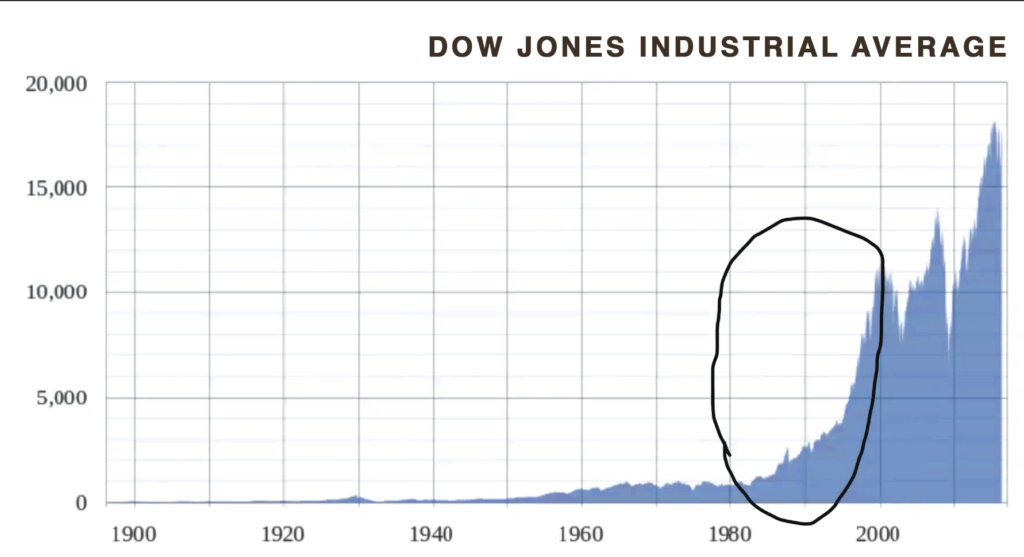
      • How much was the cumulative rate of return on the DOW from 1900-1980?
      • What about 1980-2000? Why does Les call this time the “roaring 20”?
      • What happened on Black Monday?
      • What was the average climb during the 1980-2000 period?
      • What’s the story with the 401(k) in the 80s?
      • What are arithmetic averages?
      • What is a return?
      • What is the difference between a return and a change?
      • When do you truly receive a return?
      • Does your investment advisor take fees and taxes into account when they present an update to you?
      • How does volatility affect your future?
      • What’s the difference between an average and real dollars?
      • How can you calculate the change of how much you’ve really made or lost?
      • If you take the Standard and Poor’s Index (the S&P) from December 31, 2000 until the changes of December 31, 2016, what happened with volatility, and what was the average rate of return?
      • How do investment advisors anticipate the future earnings?
      • Do stocks perform in a straight line?
      • How can the cumulative rate of return help make sense of actual performance?
      • How can you check your math?
      • How does the math of the rate of return vs. the cumulative rate of return affect you?
      • Are you willingly putting up with the volatility, the fees and taxes for a whopping 3.35% return?
      • How does this affect pension funds and 401(k)s?
      • What is the reality?
      • What’s the difference between what we think we know and what we actually see?
      • When you look at the math, what do you come up with?
      • Do you have time to make it up?
      • Is compounding flexible?
      • Why does volatility destroy compounding?
      • Do stocks and bonds narrow volatility?

    Lester N. Himel discovered the use of specific types of Life Insurance to enhance and expand the performance of investment portfolios several years ago; this after spending 28 years in a variety of positions on Wall Street. Like most financial professionals, he considered stocks, bonds and similar instruments as the core of a reasonable investment approach. In those last several years, Les has found the better way.

    Les comes to this field with a very broad financial background. He started as a compliance officer, worked in administration, was an institutional bond trader, developed an Emerging Markets business, and was also involved with “alternative investments”. Now, as one of only 200 Bank on Yourself authorized advisors, and with his ability to integrate far-reaching insights, he guides clients to financial success. Les prefers low risk and “guarantees”, and has an ability to simplify explanations of what, why and how. Les has achieved various FINRA registrations, and is a Chartered Financial Consultant (ChFC).
    Lester resides in Westchester County, New York with his family and stays very busy working with clients across the country.


    https://media.blubrry.com/nyafinancialpodcast/content.blubrry.com/nyafinancialpodcast/NYAFP_Episode_52.mp3

    Episode 43: Life Insurance and Couples – A Commitment for Life

    June 29, 2018 by Not Your Average Financial Podcast

    https://media.blubrry.com/nyafinancialpodcast/content.blubrry.com/nyafinancialpodcast/NYAFP_Episode_43.mp3

    Podcast: Play in new window | Download

    Subscribe: Apple Podcasts | RSS

    In this episode, we ask:

    • How much should we put on each person?
    • Should it be 50/50? 60/40? 0/100?
    • Is the cost of insurance more expensive for two policies (instead of one)?
    • Would it be cheaper to put it on the healthier partner?
    • Would it be most efficient to put it on the younger partner?
    • Where is the difference when one spouse is healthier?
    • What did Mark and Katrina do with their first policies?
    • What about when you are rated for health concerns?
    • How does a health rating tend to affect your cash value?
    • How does a health rating tend to affect your death benefit?
    • How do we design the policy when there is a health rating?
    • How do we design the policy for maximum cash accumulation?
    • How much insurance do I need? How much do they need?
    •  Is it possible to get more insurance than you actually need?
    • How much do you actually need? https://www.lifehappens.org/insurance-overview/life-insurance/calculate-your-needs/
    • How much do most people need?
    • What about “nonworking” (non-salaried) spouses?
    • What about Long Term Care needs?
    • What is the average day care cost?
    • What other underwriting factors exist beyond income?
    • How much life insurance do empty nesters need?
    • How much do you need for health expenses and long term care expenses in retirement?
    • How will you be paying for those expenses when they emerge?
    • Are you thinking long range?
    • How much extra does a long term care or accelerated death benefit rider cost on a whole life insurance contract?
    • Is Long Term Care coverage a vote for putting a policy on each spouse?
    • What are the restrictions around a long term care or accelerated death benefit rider?
    • How can you protect your family from going into unnecessary debt when you die?
    • How can you protect your family from taking on the burden of taking care of your final expenses when you die?
    • Do you need life insurance if you’ve paid off your mortgage?
    • What are the advantages and disadvantages of having a policy on each partner?


    https://media.blubrry.com/nyafinancialpodcast/content.blubrry.com/nyafinancialpodcast/NYAFP_Episode_43.mp3
    Prev Page...

    Sign Up to Receive Weekly Email Notifications

    Not Your Average Financial Podcast
      Thank you for Signing Up
      Please correct the marked field(s) below
    1,true,6,Contact Email,2
    1,false,1,Last Name,2

    Copyright © 2026 · Maron Pro Theme on Genesis Framework · WordPress · Log in