Not Your Average Financial Podcast™

Think different about your money, your economy and your future. Be curious. Be stable. Be sane.

Episode 52: A New Perspective with Les Himel (Part 1)

August 31, 2018 by Not Your Average Financial Podcast

https://media.blubrry.com/nyafinancialpodcast/content.blubrry.com/nyafinancialpodcast/NYAFP_Episode_52.mp3

Podcast: Play in new window | Download

Subscribe: Apple Podcasts | RSS

In this episode, we ask:

    • What has Les Himel learned in his 28 years on Wall Street?
    • What are the myths of standard conventional wisdom?
    • What are the rules of thumb we should always be able to rely on?
    • Can you get 10% or more per year in the market?
    • How much lower will taxes go?
    • What was the highest marginal tax rate in recent history?
    • How does anyone pay over 90% in taxes?
    • What happens when you go up in scale on your income?
    • Will you be in a different tax bracket in the future?
    • Are you looking at your finances in a 1 or 2 year time frame or in a 30, 40, 50 year time frame?
    • What are the realities of the stock market?
    • What is a cumulative rate of return?
    • How much was the cumulative rate of return on the DOW from 1900-1980?
    • What about 1980-2000? Why does Les call this time the “roaring 20”?
    • What happened on Black Monday?
    • What was the average climb during the 1980-2000 period?
    • What’s the story with the 401(k) in the 80s?
    • What are arithmetic averages?
    • What is a return?
    • What is the difference between a return and a change?
    • When do you truly receive a return?
    • Does your investment advisor take fees and taxes into account when they present an update to you?
    • How does volatility affect your future?
    • What’s the difference between an average and real dollars?
    • How can you calculate the change of how much you’ve really made or lost?
    • If you take the Standard and Poor’s Index (the S&P) from December 31, 2000 until the changes of December 31, 2016, what happened with volatility, and what was the average rate of return?
    • How do investment advisors anticipate the future earnings?
    • Do stocks perform in a straight line?
    • How can the cumulative rate of return help make sense of actual performance?
    • How can you check your math?
    • How does the math of the rate of return vs. the cumulative rate of return affect you?
    • Are you willingly putting up with the volatility, the fees and taxes for a whopping 3.35% return?
    • How does this affect pension funds and 401(k)s?
    • What is the reality?
    • What’s the difference between what we think we know and what we actually see?
    • When you look at the math, what do you come up with?
    • Do you have time to make it up?
    • Is compounding flexible?
    • Why does volatility destroy compounding?
    • Do stocks and bonds narrow volatility?

Lester N. Himel discovered the use of specific types of Life Insurance to enhance and expand the performance of investment portfolios several years ago; this after spending 28 years in a variety of positions on Wall Street. Like most financial professionals, he considered stocks, bonds and similar instruments as the core of a reasonable investment approach. In those last several years, Les has found the better way.

Les comes to this field with a very broad financial background. He started as a compliance officer, worked in administration, was an institutional bond trader, developed an Emerging Markets business, and was also involved with “alternative investments”. Now, as one of only 200 Bank on Yourself authorized advisors, and with his ability to integrate far-reaching insights, he guides clients to financial success. Les prefers low risk and “guarantees”, and has an ability to simplify explanations of what, why and how. Les has achieved various FINRA registrations, and is a Chartered Financial Consultant (ChFC).
Lester resides in Westchester County, New York with his family and stays very busy working with clients across the country.


Episode 51: [Toolbox] Does Buy and Hold work?

August 24, 2018 by Not Your Average Financial Podcast

https://media.blubrry.com/nyafinancialpodcast/content.blubrry.com/nyafinancialpodcast/NYAFP_Episode_51.mp3

Podcast: Play in new window | Download

Subscribe: Apple Podcasts | RSS

In this episode, we ask:

  • Should you buy and hold index funds? Should you buy and hold ETFs?
  • What is buy and hold?
  • What did Einstein say is the 8th wonder of the world?
  • Have you been influenced by this idea of buy and hold?
  • Have you ever been told to “stay the course” in your accounts?
  • Where can you find buy and hold?
  • What are the problems of buy and hold investing?
  • Why is there so much clickbait with buy and hold?
  • What is Warren Buffet’s favorite holding period?
  • Can you hold a stock forever?
  • What about your finite life?
  • What is the max we can do?
  • How long does the average person hold their stock?
  • What about back in the 1960s?
  • Do we buy and sell at the right times?
  • What about the recent advice in Tony Robbins’ latest book Unshakeable?
  • What is “financial winter” ?
  • When does “financial winter” come?
  • How often does “financial winter” come?
  • How much on average has wall street lost every single year?
  • On average how much can you expect to lose every 3 to 5 years?
  • Was 2008 just a “financial winter”?
  • What is the problem of losing 14% per year?
  • Is it acceptable to lose 34% every 3 to 5 years?
  • How much more do you have to earn after that sort of loss?
  • Do the bad years hurt much more than the good years help?
  • What is the problem of “bouncing back”? Do you actually “bounce back”?
  •  Did you break even? Did you lose money?
  • If your main point to stay in a 401(k) is to avoid the penalty, does it matter with a 14% annual loss?
  • But what about the match?
  • How can you protect your cash?
  • Would you like your money to grow in a straight line or like a roller coaster?
  • Where does your money live?
  • What emotions are involved with buy and hold?
  • Why not take the straight line?
  • How does volatility affect your lifespan?
  • How often do dips happen?
  • What kind of life do you want to live?
  • What about active management?
  • What about passive (buy and hold) management?
  • What’s better than buy and hold? Active management? Safety and liquidity?

Episode 50: [Toolbox] Gaining from Financial Chaos and Disorder

August 17, 2018 by Not Your Average Financial Podcast

https://media.blubrry.com/nyafinancialpodcast/content.blubrry.com/nyafinancialpodcast/NYAFP_Episode_50.mp3

Podcast: Play in new window | Download

Subscribe: Apple Podcasts | RSS

In this episode, we ask:

  • What is the opposite word for fragile?
  • Have you read the book Antifragile by Nassim Taleb?
  • What is fragile?
  • What is robust?
  • What is antifragile?
  • What happens when harm is involved?
  • Is there more upside or downside?
  • Do we learn from our mistakes?
  • How does this apply to the financial system?
  • Is our system fragile?
  • Are we more stable / robust?
  • Are we antifragile?
  • What is hormesis? 
  • What are some examples of healthy hormesis?
  • How can you increase your upside and decrease the downside?
  • How can you lower your exposure to the negative?
  • How can small shocks affect you?
  • How do big shocks affect you?
  • How does weightlifting make you antifragile?
  • Do you know the concept in mythology of Hydra?
  • What’s the difference between a starfish and spider?
  • What about redundancy?
  • What is the barbell strategy?
  • What is a speculative investment?
  • Do you have a pile of cash to take advantage of opportunities as they arise?
  • How is the barbell strategy like the financial triangle?
  • What is touristification?
  • Why do we systematically try to remove randomness and uncertainty from our lives?
  • How is the rational person able to adjust things based on new information?
  • Do you take in new information, on the ground, as you go?
  • What was the strength of Steve Jobs?
  • Why did he ignore focus group data?
  • Do you know what you want?
  • Which is more robust as time goes on… the iPhone or the chair?
  • Which is more robust as time goes on… the old or the new?
  • Which is more robust as time goes on… printed books or the Kindle?
  • Which is more robust as time goes on… Wall Street or Life Insurance?
  • What is the truth behind the financial instruments where we keep our cash?
  • Do you ask “What’s wrong with this financial instrument?”
  • What are some antifragile lifestyle choices?
  • What does this have to do with money?
  • How can you make your financial system more antifragile?
  • What question should you ask your stock broker?
  • What can we do differently?
  • Do you have the option to take chances?
  • How can you lower your downside in your financial structures?
  • How can you raise your upside in your financial structures?

Episode 49: [Toolbox] How Banks Win (Hint: It’s not about the Rate of Return)

August 10, 2018 by Not Your Average Financial Podcast

https://media.blubrry.com/nyafinancialpodcast/content.blubrry.com/nyafinancialpodcast/NYAFP_Episode_49.mp3

Podcast: Play in new window | Download

Subscribe: Apple Podcasts | RSS

In this episode, we ask:

  • Who is winning?
  • Why are the banks winning?
  • How much are we saving, according to the Economic Policy Institute?
  • What’s the real, the median rate of savings for American families?
  • Is $5,000 dollars enough for total family savings?
  • When did we become a nation of debtors?
  • What is the median income in the U.S.?
  • How much are we spending?
  • Why are so many of us slaves to the bank?
  • When will we be free from the debts and creditors?
  • What about buying a car?
  • How much of a car payment is going toward interest?
  • What’s the volume of interest?
  • How much of a mortgage is going toward bank profits?
  • Are you almost doubling the cost of the home by financing it?
  • What’s the volume of interest?
  • Where is our attention?
  • What matters most for retirement?
  • How is the rate different than the volume?
  • How much are you saving?
  • Are you paying attention to your financial environment?
  • Is there something better than paying cash?
  • Is there something better than being debt free?
  • How can you recapture the volume of interest back from the banks?
  • Does rate of return even matter?
  • What is the flow of interest?
  • What does the bank do with your money?
  • How much interest does the bank pay you?
  • What’s the rate of return the bank receives?
  • What’s the volume of return the bank receives?
  • Have you read Debt: The First 5,000 Years?
  • How do banks make so much money?
  • What is Fractional Reserve Banking?
  • How do banks leverage other people’s money?
  • What happened in the late 1980s/early 1990s with the Savings and Loan debacle?
  • What happens to your money when you hand your money over to the bank?
  • What is FDIC?
  • Were the banks in great shape in 2008-09?
  • What happens when the rates are artificially pushed down?
  • Are you thinking like a banker?
  • How much are the banks really making on the TARP money?
  • Are banks evil?
  • Would you like to own your own FDIC insured bank? Do you have buckets of money and a decade of free time?
  • Can a bank make a loan without a deposit?
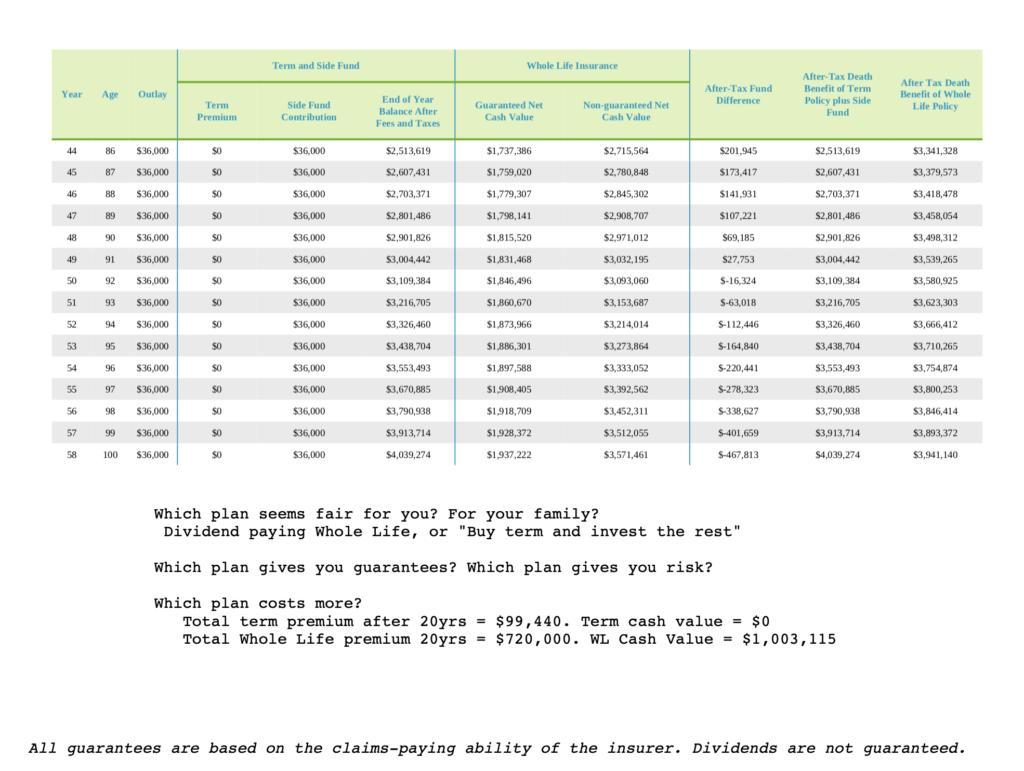
  • Can you accomplish your own personal banking system with dividend paying whole life insurance?
  • Do you want to do what banks tell you what to do with your money?
  • Do you want to do what banks do with their own money?
  • What does it take to start thinking like a banker?
  • Are you in control of your financial environment?
  • Are you using the tail wind to your advantage?
  • What strategic adjustments can you make to advance?


North American Households: Savings and Debt

Episode 48: The Secret 10/10/10 Formula – How Much Do I Need To Save?

August 3, 2018 by Not Your Average Financial Podcast

https://media.blubrry.com/nyafinancialpodcast/content.blubrry.com/nyafinancialpodcast/NYAFP_Episode_48.mp3

Podcast: Play in new window | Download

Subscribe: Apple Podcasts | RSS

In this episode, we ask:

  • Is it possible that you’ve been told something that isn’t true?
  • What is the 10/10/10 rule?
  • What about 10 percent to short term needs?
  • What about 10 percent to anticipated mid-term needs?
  • What about 10 percent to long term retirement planning?
  • How the heck can I save 30% of my income?!
  • What is the average American’s savings rate?
  • How am I supposed to squeeze even 2% savings out of our income?
  • What are some strategies to get a larger savings?
  • How might you restructure your debt?
  • How might you rethink your tax refund?
  • How can you get a bigger paycheck throughout the whole year?
  • What lifestyle changes can you adopt?
  • Do you need to buy a car annually?
  • Can you carry your coffee from home in lieu of buying out?
  • How much can you save by switching to a lower cell phone plan?
  • How can you find a way to not use a traditional cable subscription?
  • How much can you save annually?
  • Have you heard our Habit Shift episode, Episode 46?
  • What are some additional strategies?
  • How can you work with your 401(k) and other long term savings?
  • Can your short term needs be taken care of first?
  • Have you considered liquidating illiquid assets?
  • What good does a 12% return on your brokerage account do for you?
  • How much does the average American spend on debt payments? 34%
  • Is the bottom of your bucket leaking faster than the money coming in?
  • When did we shift from savings to debt?
  • How could past generations save 30%?
  • How did we flip it upside down?
  • How can we right the ship?
  • Do you have to wait for Congress or your employer to start saving?
  • What is the best plan?
  • What if you can’t save 30%? 10/10/10
  • Can you save 6%? 2/2/2
  • Can you save 15% 5/5/5
  • Can you save 21? 7/7/7
  • What’s possible for you?
  • Can you put your savings on autopilot?
  • Can you track your progress?
  • Can you make more income?
  • Can you live within your means?
  • Can you save?
  • Where can you save?
  • What is the foundation of the financial pyramid?
  • Where can you stash your cash?
    • For Safety and Liquidity
      • Under your mattress, in a tin can, stashed in the basement, inside a safe, in the drywall, in a hole in the yard (liquid, no interest, poorer security, loss, inflation issues, may literally be eaten by pests)
      • Savings Accounts (automatic transfers, banks pay virtually no interest)
      • Certificates of Deposit (CDs) (varying terms, higher interest than a savings account, fees for terminating early, safe, guaranteed, not as liquid)
      • Money Market Accounts (insured, earns a bit of insurance, lump sums required, withdrawals are limited)
      • Money Market Mutual Fund (comes with a higher interest rate, a subset of mutual funds, restrictions and limitations, low returns, no insurance, relatively safe)
      • Dividend Paying Whole Life Insurance (a blend of life insurance and savings, benefits while you’re alive, compound interest, cash equivalent, liquid, guaranteed, comes with increasing values for the rest of your life, safe and liquid, borrow at below market rates, mutual benefits, established) What is diversification? Insurance against loss. What is the best financial vehicle that solves against loss? Insurance.
      • Watch out, there is a high likelihood these are problematic: Variable Life (risky, increased expenses, lacking guarantees), Indexed Universal Life (risky, penalties), Term Insurance (not liquid, only “renting” a death benefit).
      • Downsides: Long term commitments. Sounds easy, but it may be hard to save consistently over the long term.  Keep it for 10 years or longer, ideally over your whole life. Whole Life Insurance contracts are not a get rich quick scheme —  they require discipline.


Episode 47: Invest in Yourself

July 27, 2018 by Not Your Average Financial Podcast

https://media.blubrry.com/nyafinancialpodcast/content.blubrry.com/nyafinancialpodcast/NYAFP_Episode_47.mp3

Podcast: Play in new window | Download

Subscribe: Apple Podcasts | RSS

In this episode, we ask:

  • How are YOU your greatest asset?
  • Can you commit to investing in yourself?
  • How do you help yourself build a larger income?
  • How do you advance yourself?
  • How can you be more disciplined?
  • Do you pay attention?
  • Are you depreciating yourself?
  • Do you live cheap? Do you live within your means?
  • Do you go too far in that regard — over simplifying, down to the bone?
  • How do you advance your career?
  • Does making a lot of money solve it?
  • How do you find a good balance?
  • Do you have a good balance?
  • How might you accomplish your goals?
  • Early on, how is wealth created?
  • Can you get rich through subtraction?
  • Can you get rich through addition?
  • Can you get rich through multiplication?
  • How do you increase your income?
  • Can you be willing to accept any job at the start?
  • Is your income based on your time?
  • How can you leverage your time to your advantage?
  • Can someone else do this 80% as good as you can?
  • What can you learn? What skills can you take on?
  • You can always always always outspend your income.
  • Once you get paid, what do you do with the cash?
  • How do you get the cash out of sight, out of mind?
  • How do you create multiple streams of income?
  • How can you find other ways to make money in related ways to your primary source of income?
  • How do you keep your money liquid?
  • How do you reach up?
  • Do you grow to be like the people you’re around?
  • How can you take responsibility?
  • How can you take the game to the next level?
  • What is the opposite of taking responsibility?
  • What happens when you blame your circumstances?
  • Do you want to participate in your whole life?
  • Do you realize that you’re getting caught up in a line of thinking?
  • Why do people over-control their spending?
  • How can you make an extra 10K this year?
    • Uber? Lyft?
  • What if you cut out 10K of expenses in concert with making 10K of extra income?
  • Do you limit yourself?
  • Are you worth it?
  • How might you save properly?
  • Why invest in yourself?
  • How might you save more?

Episode 46: Habit Shift

July 20, 2018 by Not Your Average Financial Podcast

https://media.blubrry.com/nyafinancialpodcast/content.blubrry.com/nyafinancialpodcast/NYAFP_Episode_46.mp3

Podcast: Play in new window | Download

Subscribe: Apple Podcasts | RSS

In this episode, we ask:

  • Why do we do what we do?
  • Who writes financial “infotainment” articles?
  • Why aren’t finances commonly taught in school?
  • Who are the guides along your path who are looking out for you?
  • How do you take action with the information you learn?
  • How do you get unstuck?
  • How do you describe a habit?
  • Can you find a way to get it done?
  • Where is the motivation?
  • What do you do with frustration?
  • What do you do with anger?
  • Do you have courage to overcome the inertia?
  • Where does the majority of effort go into a habit shift?
  • How do you redirect?
  • How do you break through excuses?
  • Have you ever had a breaking point?
  • Do you wonder why someone else is doing better than you are?
  • What is the first thing you think when you get out of bed?
  • How do we make a habit shift?
  • Who is Dr. Sean Young?
  • Have you read his new book, Stick with It?
  • What does A.B.C. stand for?
    • Automatic – i.e. biting your nails, unconscious routines
    • Burning – i.e. addiction; irresistible urge; burning desire; nearly automatic
    • and Common – i.e. repeated, conscious behaviors
  • How do you identify the particular tool for changing that behavior?
  • What does the acronym S.C.I.E.N.C.E. stand for?
    • Step ladders – a way of little by little, moving forward, one step at a time. Set little goals, one by one.
    • *Community – Being around other people that you want to be like, social support, competition
    • Important – Whatever changes you’re going to accomplish will be able to last. Is it important to you?
    • *Easy – You have to make this easy. How can you make it so easy to do?
    • Neuro-hacks – Psychological tricks that help reset the brain by looking back at past behaviors. How might you set up a neurohack?
    • Captivating – People keep doing things if they’re rewarded with things they need.
    • *Engrain – This is the process that the brain uses to reward consistent change. How can you do this over and over again?
  • Who said “Don’t break the chain!” ?
  • If you can only implement a portion of this, what are the primary go-to tools from S.C.I.E.N.C.E.? Easy and Engrain.
  • What examples are there?
  • When you really need to change a common behavior, what’s the best strategy? Community.
    • How might you surround yourself with people who you would like to be with? How can you adopt some of those patterns yourself?
    • What books, conferences and podcasts can you take you to the next level?

Episode 45: Emotions and Money

July 13, 2018 by Not Your Average Financial Podcast

https://media.blubrry.com/nyafinancialpodcast/content.blubrry.com/nyafinancialpodcast/NYAFP_Episode_45.mp3

Podcast: Play in new window | Download

Subscribe: Apple Podcasts | RSS

In this episode, we ask:

  • What do emotions have to do with money?
  • Did you know that people spend more when they’re sad?
  • Have you heard of tulip mania?
  • How does shame or fear play into buying decisions?
  • How does greed affect us?
  • What about buy-and-hold index funds and strategies?
  • What about the emotions with Bitcoin?
  • Do you feel shame when you don’t understand money?
  • Do you feel shame when you lose money in the market?
  • Do you feel scared of making another mistake?
  • How are arrogance, greed, shame and fear all the same?
  • How about emotions about money at work?
  • How does this reveal the human heart?
  • Have you felt that pit in your stomach?
  • What forces you to face the raw stuff of life?
  • What training did you receive around how to manage emotions around money?
  • What happens with a sizable loss in your investments? Can it lead to a shorter lifespan?
  • What is a wealth shock?
  • How is wealth shock like heart disease?
  • Has your physician asked you how money is affecting your (the patient’s) health?
  • How has the digital era ushered in new conveniences in spending?
  • What about saving for retirement and future plans?
  • How do your emotions affect your relationships with money?
  • How does Wall Street use emotion?
  • What are the two types of money we interact with?
    • How do we emotionally respond to fast money?
    • How do we emotionally respond to slow money?
  • How do we deal with money for future needs?
  • Do you have an underlying anxiety around money?
  • What is a current of discontent?
  • What are the primary emotions associated with slow and fast money?
    • Borrowed money = guilt
    • Purposeful money (retirement, education, vacation) = underlying anxiety
    • Experimental money = excitement
    • Emergency fund / saving / responsibility = peace of mind / kindness
  • Have you written your future self a letter?
  • Where would you like to be in 30 years? 20 years? 10 years? 5 years?
  • What’s a common source of stress in relationships?
  • What about different risk tolerance levels within a relationship?
  • What about emotions agreement on spending within relationship?
  • What about emotions around micromanaging another person?
  • What tool will significantly eliminate financial stress?
  • What two words added together sound just terrible?
  • Why do budgets need to be active?
  • What about budgeting with kids?
  • What did Holly learn about practicing budget meetings with her husband?
  • What self imposed limits do you have on spending?
  •  What builds resentment in a relationship long term?
  • What do you need to buy for yourself?
  • How is budgeting like an improv session?
  • Should you budget your savings?
  • How can you come in with agreement that you will make it through the challenge together?
  • In relationships: you’re either fighting or loving each other…
  • If there is any blame or anger, the couple needs to work through that before budgeting.
  • How can you view this as a challenge?
  • How can you communicate your feelings (negative and positive) instead of shutting down or withdrawing?
  • What are the two sides to fear?
  • How do you get from fear to excitement? Take a deep breath.
  • Have you read Carol Dweck’s book Mindset?
  • Did you know that couples who return to a state of positivity tend to get through challenges?
  • Are you solutions oriented?
  • How do you keep your emotions in check?
    • Visualize – focusing on a visual image of your goal makes it easier to put blinders on; carry around a picture of that goal or set up a digital board
    • Talk with your partner – spouses don’t even realize that they differ on goals
    • Know How Much You’re Spending – people tend to grossly underestimate how much you’re spending
    • Do a Brain Dump – Uncover those long term goals, take the time to make a plan
    • Share Your Goals with Others – research has shown that people benefit from sharing their goals to get the support they need

Episode 44: Building a Portfolio of Bank on Yourself for the Whole Family

July 6, 2018 by Not Your Average Financial Podcast

https://media.blubrry.com/nyafinancialpodcast/content.blubrry.com/nyafinancialpodcast/NYAFP_Episode_44.mp3

Podcast: Play in new window | Download

Subscribe: Apple Podcasts | RSS

In this episode, we ask:

  • How does the banker’s mindset change everything?
  • What does a banker think about all day long?
  • What is a “system” of policies?
  • Why do bankers save cash?
  • Do you remember Scrooge McDuck?
  • When does the banker’s mindset go into full gear?
  • What is the limit of the number of insurance policies one individual can own?
  • Can you imagine owning 40 life insurance policies?
  • What system of policies works best?
  • What is The Family Network Method?
  • How are easterners different from westerners with money?
  • Why do we keep our money secret?
  • How do generations pass money to each other?
  • What about insurability?
  • What if someone is in poor health?
  • What about the guarantees?
  • What is predictable?
  • How do families pay for college?
  • How do families pay for cars?
  • How do the families pass on wealth?
  • What about setting up a trust?
  • What about a real life example of a family purchasing together?
  • What about spoiling your kids?
  • What about final expense and funeral costs?
  • What do you want your last impression to be?
  • Can you expect an inheritance?
  • What about the family farm?
  • Can you predict financial milestones?
  • How did Tim predict milestones? What about Tim’s roadmap?
  • What’s Mark story with opening policies?

For the chart Mark references, see Chapter 11 of the Bank on Yourself Revolution book by Pamela Yellen.


Episode 43: Life Insurance and Couples – A Commitment for Life

June 29, 2018 by Not Your Average Financial Podcast

https://media.blubrry.com/nyafinancialpodcast/content.blubrry.com/nyafinancialpodcast/NYAFP_Episode_43.mp3

Podcast: Play in new window | Download

Subscribe: Apple Podcasts | RSS

In this episode, we ask:

  • How much should we put on each person?
  • Should it be 50/50? 60/40? 0/100?
  • Is the cost of insurance more expensive for two policies (instead of one)?
  • Would it be cheaper to put it on the healthier partner?
  • Would it be most efficient to put it on the younger partner?
  • Where is the difference when one spouse is healthier?
  • What did Mark and Katrina do with their first policies?
  • What about when you are rated for health concerns?
  • How does a health rating tend to affect your cash value?
  • How does a health rating tend to affect your death benefit?
  • How do we design the policy when there is a health rating?
  • How do we design the policy for maximum cash accumulation?
  • How much insurance do I need? How much do they need?
  •  Is it possible to get more insurance than you actually need?
  • How much do you actually need? https://www.lifehappens.org/insurance-overview/life-insurance/calculate-your-needs/
  • How much do most people need?
  • What about “nonworking” (non-salaried) spouses?
  • What about Long Term Care needs?
  • What is the average day care cost?
  • What other underwriting factors exist beyond income?
  • How much life insurance do empty nesters need?
  • How much do you need for health expenses and long term care expenses in retirement?
  • How will you be paying for those expenses when they emerge?
  • Are you thinking long range?
  • How much extra does a long term care or accelerated death benefit rider cost on a whole life insurance contract?
  • Is Long Term Care coverage a vote for putting a policy on each spouse?
  • What are the restrictions around a long term care or accelerated death benefit rider?
  • How can you protect your family from going into unnecessary debt when you die?
  • How can you protect your family from taking on the burden of taking care of your final expenses when you die?
  • Do you need life insurance if you’ve paid off your mortgage?
  • What are the advantages and disadvantages of having a policy on each partner?


Prev Page...
...Next Page
Be Awesome

Sign Up and Receive Weekly Email Notifications

Not Your Average Financial Podcast
  Thank you for Signing Up
  Please correct the marked field(s) below
1,true,6,Contact Email,2
1,false,1,Last Name,2

Copyright © 2026 · Maron Pro Theme on Genesis Framework · WordPress · Log in